Introduction
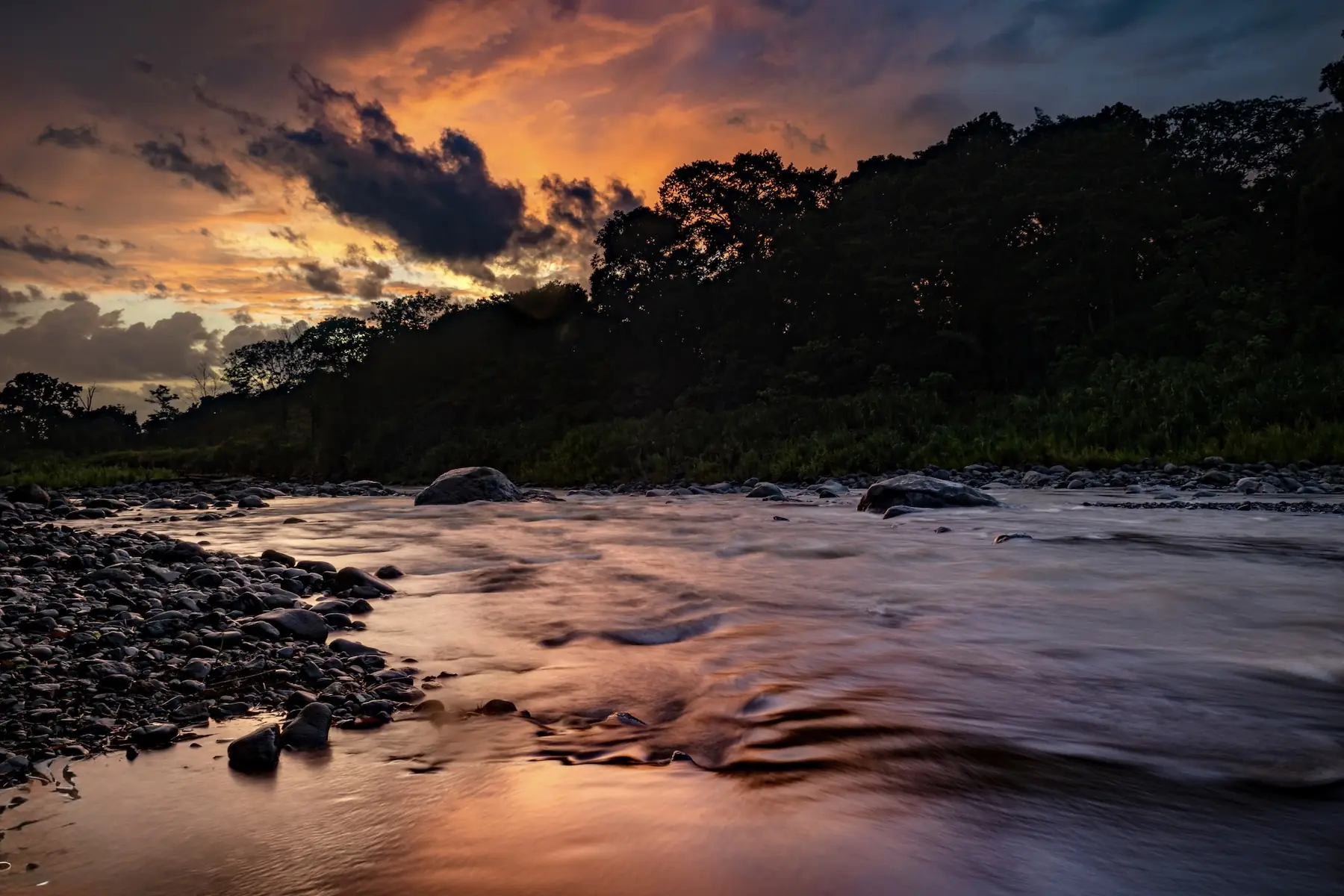
It is the second week of the training. The morning practice is over, and the trainees are sitting in a loose circle in the shala with their notebooks open, the forest canopy all around them. Someone is trying to explain why a pose matters, not just how to do it, and halfway through the sentence she stops and laughs, because she has just understood it herself. Below, the river keeps going.
If you run a yoga school and you are thinking about holding a yoga teacher training in Costa Rica, that is the moment you are really planning for. A teacher training retreat asks a lot of people: long days, a lot of new material, and the slightly exposed feeling of teaching in front of your peers for the first time. The place you choose can make that easier or harder.
We host groups at a family-owned retreat center on the Naranjo River in Costa Rica, and we have welcomed more than 5,000 guests since 2001. This guide is what we would tell a lead trainer who is weighing up a residential training abroad.
Why hold a yoga teacher training retreat at all?
Plenty of trainings run on weekends at home, and they work. A residential yoga teacher training retreat offers something different: everyone stays in one place, eats together, practices together and studies together, day after day. There is no commute, no switching back into work mode, and far fewer reasons to miss a session.
That kind of immersion tends to build a strong group. Trainees learn as much from watching each other teach, and from conversations over lunch, as from the lectures. And when the setting is quiet, attention has fewer places to go.
Choosing the length and format
Full immersion or a module
Many schools run a 200-hour training as one long immersion of about three to four weeks. Others split it: part online or at home, and an in-person module abroad for the practicum, the teaching practice and the group work. Advanced trainings are often run in shorter modules.
There is no single right answer. A full immersion asks people to step out of their lives for most of a month, which narrows who can come. A shorter module is easier to fit in but leaves less time to settle. Think about who your trainees are: their jobs, their families and their budgets.
Group size
A training needs enough people to practice teaching on each other, and few enough that every trainee gets real feedback. Many schools work well with 12 to 30 trainees. If you go larger, plan for an assistant trainer or two, and make sure the practice space can hold everyone with room to move.
Shaping the days
Long trainings need a steady rhythm more than they need variety. A typical day might look like this:
- Early morning: silent sitting or pranayama, then an asana practice led by a trainer.
- Breakfast, with time to rest.
- Late morning: philosophy, anatomy or methodology sessions.
- Lunch, then a real break. In the tropics, the middle of the day is a good time to slow down.
- Afternoon: teaching practice in small groups, with feedback.
- Evening: a gentle class, a restorative practice or a short meditation, then dinner and an early night.
Protect at least one full day off each week. People absorb more when they have time to let the material settle, and a day off in the rainforest, by a swimming hole or on a forest trail, does a lot for morale in week three.
Our sample retreat schedule walks through a full week hour by hour if you would like a more detailed template.
A pause, if you would like one
Before you go back to the spreadsheets, sit for a moment the way you might ask your trainees to. Feel the weight of the body on the chair. Let the breath move on its own for three or four rounds, without adjusting it. Notice how much easier it is to think clearly afterwards. That is the whole case for building quiet into a training.
Budgeting a yoga teacher training in Costa Rica
Set the tuition only after you have listed every cost. For a residential training that usually includes:
- Lodging and meals for every day of the training, for trainees and your staff.
- Your lead and assistant trainers' fees and travel.
- Airport transfers.
- Manuals, materials and any certification fees your school pays.
- Outings or days off, if you include them.
- A cushion for surprises.
Then decide what the training needs to earn. Some schools price residential trainings as their main income for the year; others keep them close to cost to build their community. Either is fine, as long as you choose on purpose.
Longer stays add up, so ask any venue for a clear per-person, per-day rate and exactly what it covers. For reference, our venue rate starts from $200 per person per day for groups of 20 to 30 and $220 for 12 to 19 guests, with a 12-guest minimum. That covers lodging, three organic farm-to-table meals a day and the practice spaces. There are no taxes, and bank wire has no fee. For groups over 30, ask us.
What a training venue needs
A short retreat can get away with a lot. A training of several weeks cannot. These are the things that matter most:
1. A practice space you can live in. Room for every mat with space between them, shade, airflow and a floor that is kind to knees. Ideally a second, smaller space for breakout groups. 2. Food that sustains long days. Three good meals a day, a kitchen that can handle dietary needs, and enough variety that week three does not feel like week one. 3. Quiet. Few distractions and a setting where people can study, nap or sit by the water between sessions. 4. Exclusive use. Your trainees are often tired and a little vulnerable. It helps when the only people around are your group and the staff. 5. Somewhere to go on a day off. Nature close by, so a free day does not mean a long drive. 6. Reasonable access. An airport within a few hours, and someone who can help arrange transfers.
What we offer yoga schools
We built our spaces for groups who come to practice, and we host retreats and teacher trainings for groups of 12 to 40. Here is what a training would have here:
- Exclusive use of the property for your group, up to 40 guests in 32 beds, across four casitas, an octagon bungalow and three neighboring suites.
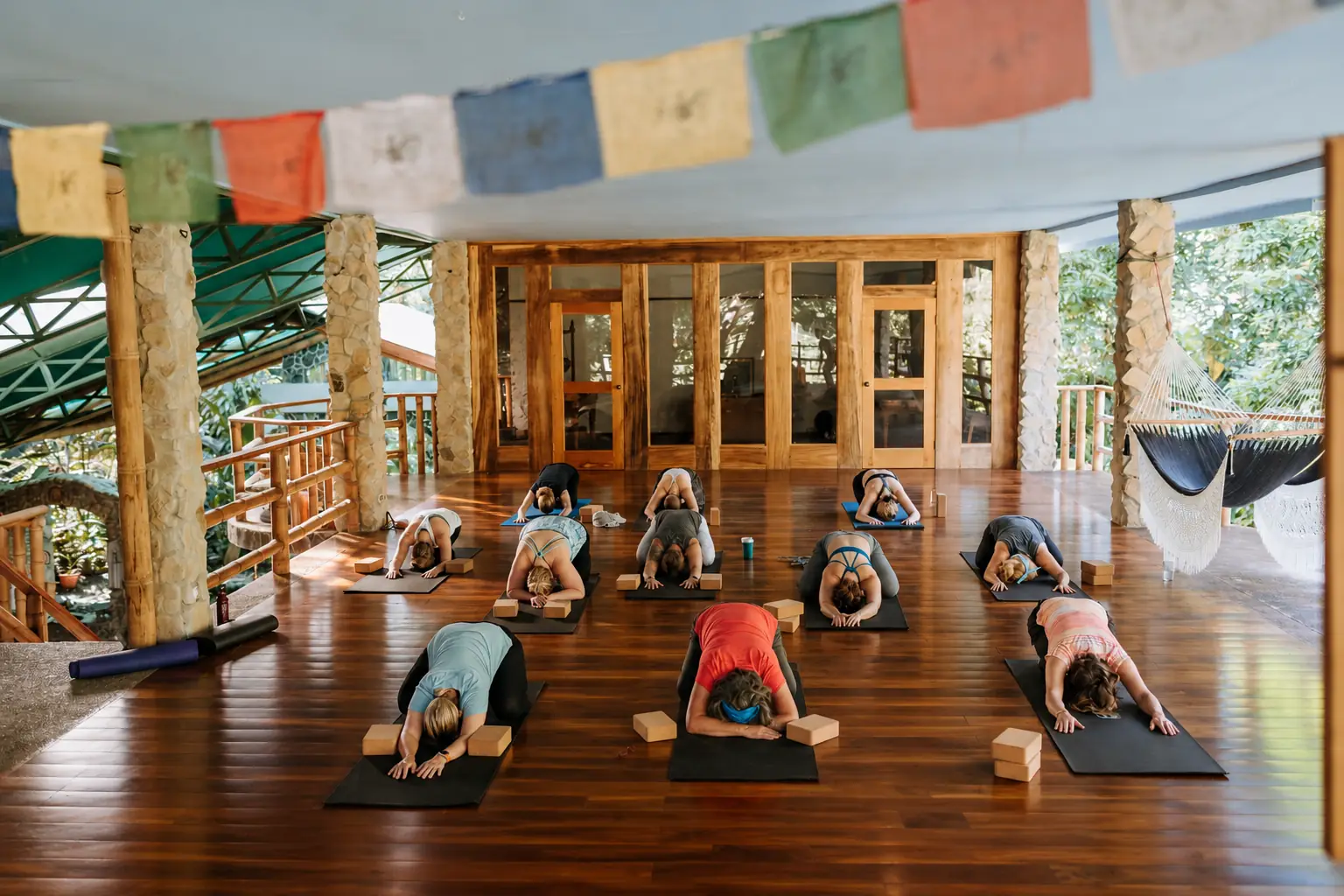
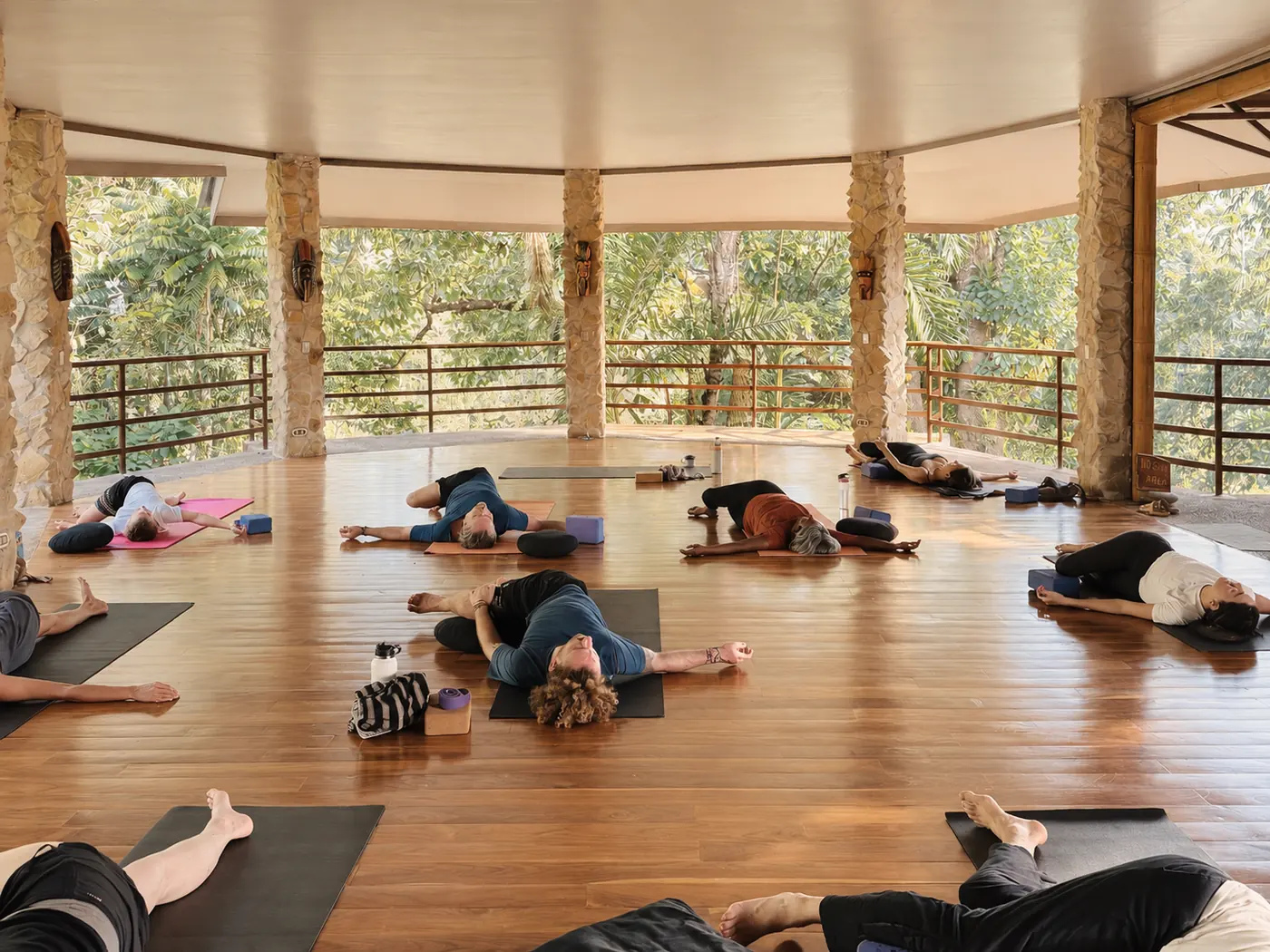
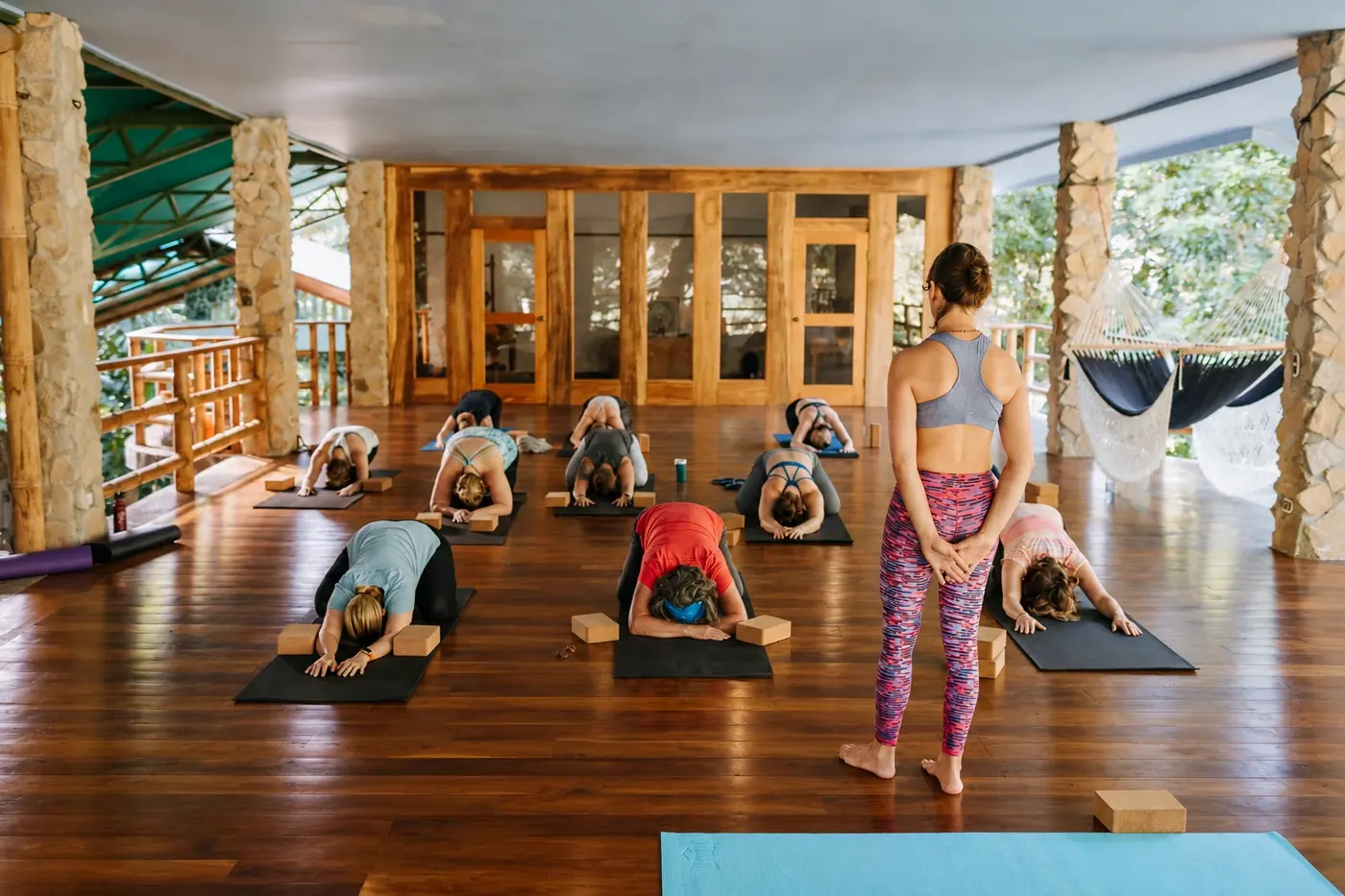
- An upstairs open-air yoga shala for up to 40 people, looking out over the forest canopy.
- A second practice space, the octagon fire temple, which holds 30 and suits smaller groups, lectures or meditation.
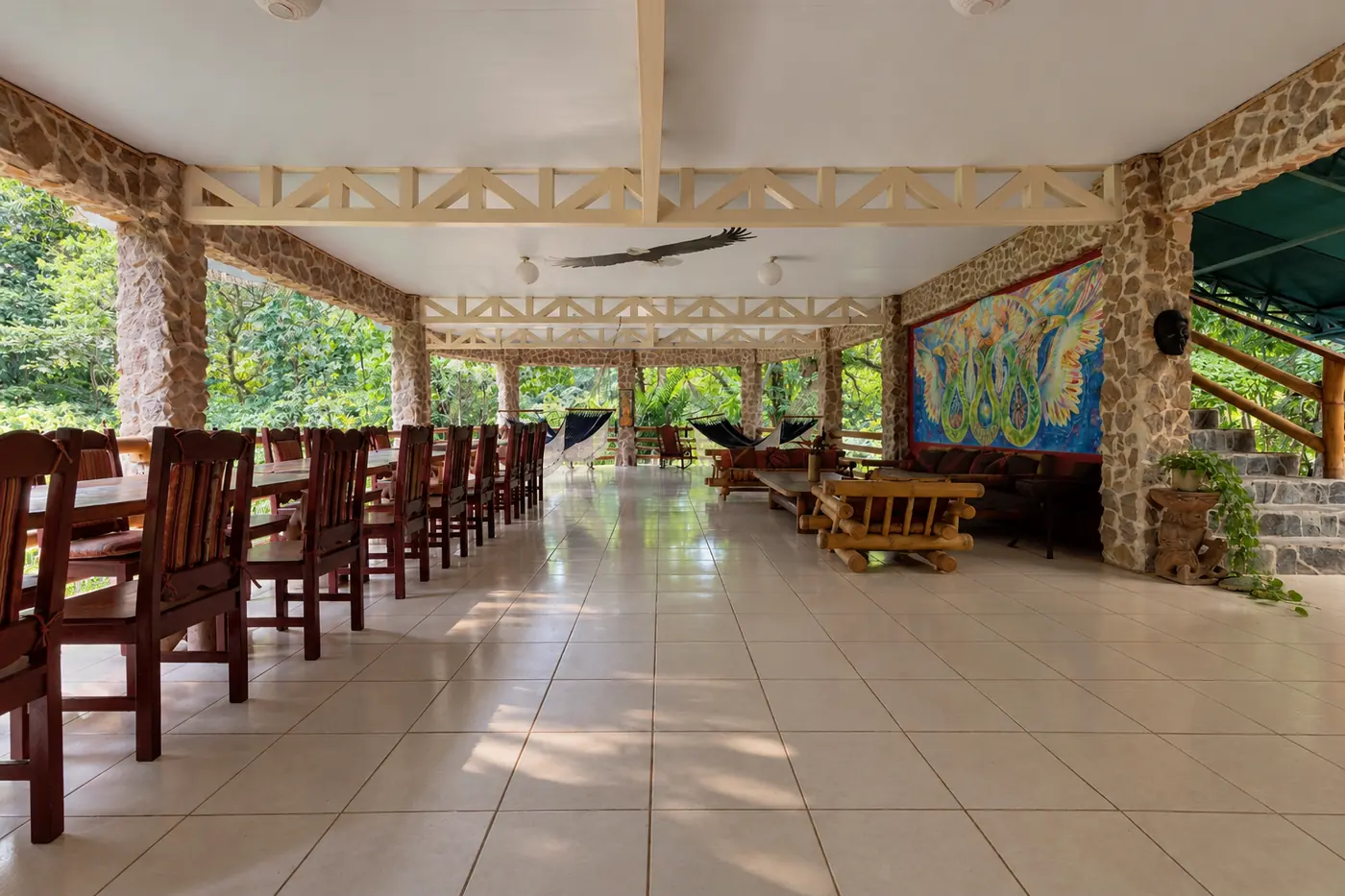
- A dining hall for 40 and three organic farm-to-table meals a day.
- Access to Eco Era's private reserve lands during your stay: waterfalls, swimming holes and primary rainforest treks for your days off.
- A location on the Naranjo River, eight miles from Manuel Antonio and 2.5 to 4 hours by road from San Jose (SJO), depending on traffic.
You lead the training. Our team looks after the meals, housekeeping and logistics, so you can stay with your trainees. You can see the spaces on our yoga retreat venue page and the rooms on our facilities and accommodations page.
Posada Natura is operated by Eco Era, a U.S. 501(c)(3) that has been protecting rainforest since 1991, and retreats fund most of that conservation work. Some schools like being able to tell their trainees that.
Questions to ask any venue before you book
- Can we have the whole property for the full length of the training?
- How big is the main practice space, and is there a second space for small groups?
- What is included in the daily rate, and what costs extra?
- Can the kitchen handle the dietary needs in our group?
- What do trainees do on a day off, and how far is it?
- How do people get from the airport, and can you help arrange it?
- Which dates are open, and how far ahead do we need to commit?
On that last one: good venues book a year or more ahead, and a training needs a long, unbroken block of dates. Start the conversation early. We currently have spring 2027, summer 2027 and winter 2028 dates open.
Frequently asked questions
Can I host a yoga teacher training in Costa Rica at Posada Natura?
Yes. We host yoga retreats and teacher trainings for groups of 12 to 40, with exclusive use of the property, an open-air shala for 40 and three meals a day. Your school runs the training; we look after the setting and the logistics.
How long is a yoga teacher training retreat?
Many 200-hour trainings run as a single immersion of about three to four weeks. Others hold a shorter in-person module and teach the rest online or at home. Advanced trainings are often split into modules.
How much does it cost to host a yoga teacher training in Costa Rica?
It depends on the length, group size and what you include. At Posada Natura the venue rate starts from $200 per person per day for groups of 20 to 30 and $220 for 12 to 19 guests, covering lodging, three meals a day and the practice spaces, with no taxes. Add your trainers, travel, materials and transfers.
Does Posada Natura certify yoga teachers?
No. Certification comes from your own school. We provide the venue, the rooms, the meals and the logistics, and you run the training.
How many trainees can stay?
Up to 40 guests in 32 beds, which includes your trainers and staff, with a 12-guest minimum.
How far is it from the airport?
We are 2.5 to 4 hours by road from San Jose (SJO), depending on traffic, and eight miles from Manuel Antonio.
Next steps
If a yoga teacher training in the rainforest sounds right for your school, have a look at the hosting details and pricing, or book a free call and tell us about your training: the length, the size of the group and the months you have in mind. We would be glad to hear about it.
Yoga retreats and teacher trainings at Posada NaturaSchedule a free discovery call
With care, The Posada Natura team