Introduction
At about 5:40 in the morning the howler monkeys start up along the river, usually before anyone in the kitchen has lit a stove. Groups who stay with us often tell us that sound ended up shaping their retreat schedule more than the plan they brought with them.
If you are looking for retreat activities, or a retreat schedule you can adapt, this is how we would think about it. We host groups at a family-owned retreat center on the Naranjo River in Costa Rica, and we have watched many leaders build a week. The agendas that work best are rarely the fullest. They leave room for people to arrive, to rest and to notice where they are.
Start with the shape, not the activities
Before you list a single activity, decide what the retreat is for. A yoga retreat, a writing retreat, a women's circle and a team offsite will all want different things, but the same few questions help each of them:
- What do you want people to feel on the last day that they did not feel on the first?
- How many hours of guided time can a person really take in a day? For most groups it is fewer than leaders expect.
- Where will the open time go? Free hours are part of the design, not a gap in it.
A useful rule is to plan the anchors and let the rest breathe. Anchors are the things that happen at the same time every day: a morning practice, meals and an evening session. Everything else can move.
Retreat activities that tend to work
Most good retreat activities are simple. These are ones we see leaders use again and again, and none of them need special equipment.
1. Morning movement. Yoga, qigong or gentle stretching before breakfast, ideally outside or in an open-air space. 2. Sitting practice. Ten to thirty minutes of silent sitting. Short and regular is easier than long and rare. 3. Walking slowly. A silent walk, even fifteen minutes, with a few minutes to share what people noticed. 4. A teaching or workshop session. One focused block a day, in the part of the day when people are most alert. 5. Small-group conversation. Groups of three or four say more than a full circle. 6. A listening circle. Each person speaks without being answered, and the others only listen. 7. Creative time. Journaling, drawing, music or writing, with no goal beyond making something. 8. Time by the water. A swim, a river sit or a long afternoon doing nothing at all. 9. Cooking or eating together. Shared meals do a lot of quiet work in a group. 10. A closing ritual. A circle, a letter or a simple sentence from each person about what they are taking home.
Pick a handful. A retreat with five well-held activities feels much fuller than one with fifteen.
A sample retreat schedule for five days
This is a shape you can lean on, not a script. We have kept it light on purpose, because most retreat leaders tell us they want to schedule less.
Day one: arrive. Travel, settling into rooms, a simple dinner and a short opening circle. Go to bed early. The first day is mostly about arriving.
Days two to four: the rhythm.
- Early morning: optional sitting or movement
- Breakfast
- Morning session (your main teaching or practice)
- Lunch, then open time
- Late afternoon: a lighter session, a walk or a creative hour
- Dinner
- Evening: a short circle, reading or quiet
Day five: close. A slow morning, a closing circle, a last meal together and travel home.
If your group is traveling a long way, consider a sixth or seventh day. A longer retreat does not need more activities. It simply gives people more time to settle.
A simple retreat agenda you can copy
Here is one day written out, the way you might share it with guests.
- 6:30 Optional movement or sitting
- 8:00 Breakfast
- 9:30 Morning session
- 12:30 Lunch
- 1:30 Open time (rest, swim, journal, walk)
- 4:00 Afternoon session
- 6:30 Dinner
- 8:00 Evening circle, then quiet
Share the agenda with your guests ahead of time, and tell them what is optional. People relax when they know what to expect and when they feel free to skip something.
What the setting adds to a schedule
You can run a retreat in almost any room, but the place changes what your schedule is able to do. Here is what groups use at Posada Natura:
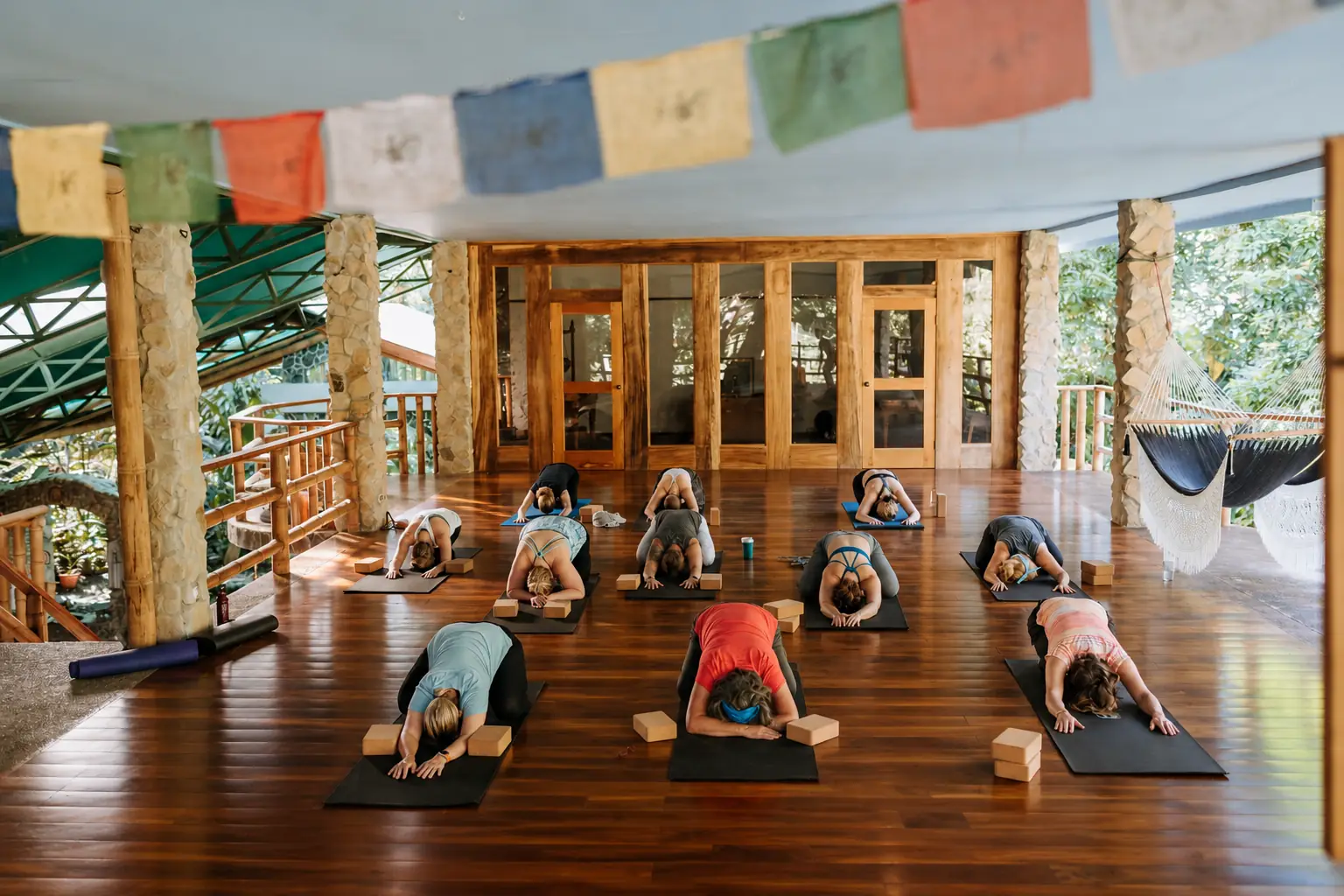
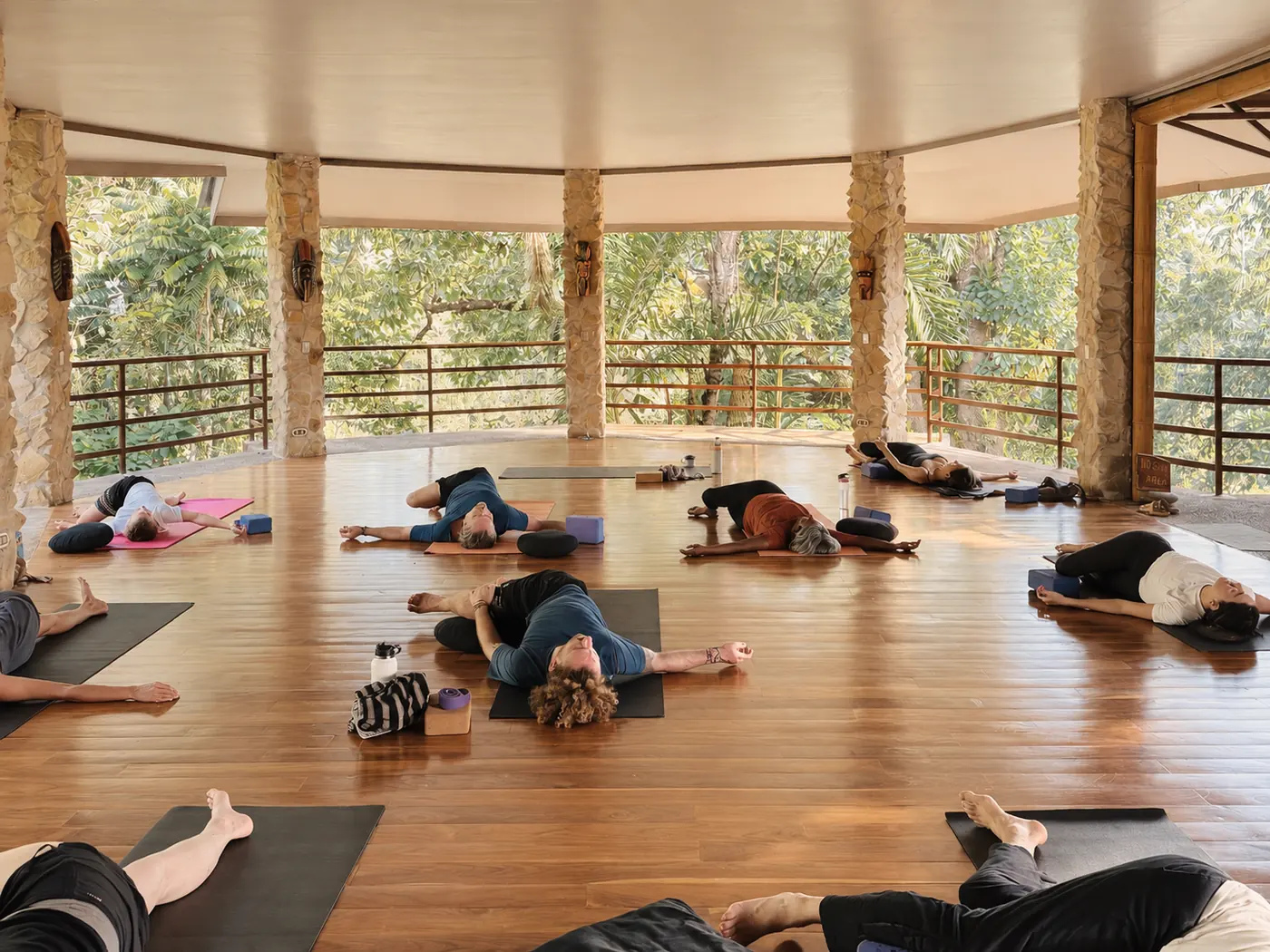
- The upstairs open-air yoga shala holds 40 and works for movement, teaching and sitting.
- The octagon fire temple holds 30 and suits circles and quieter evening sessions.
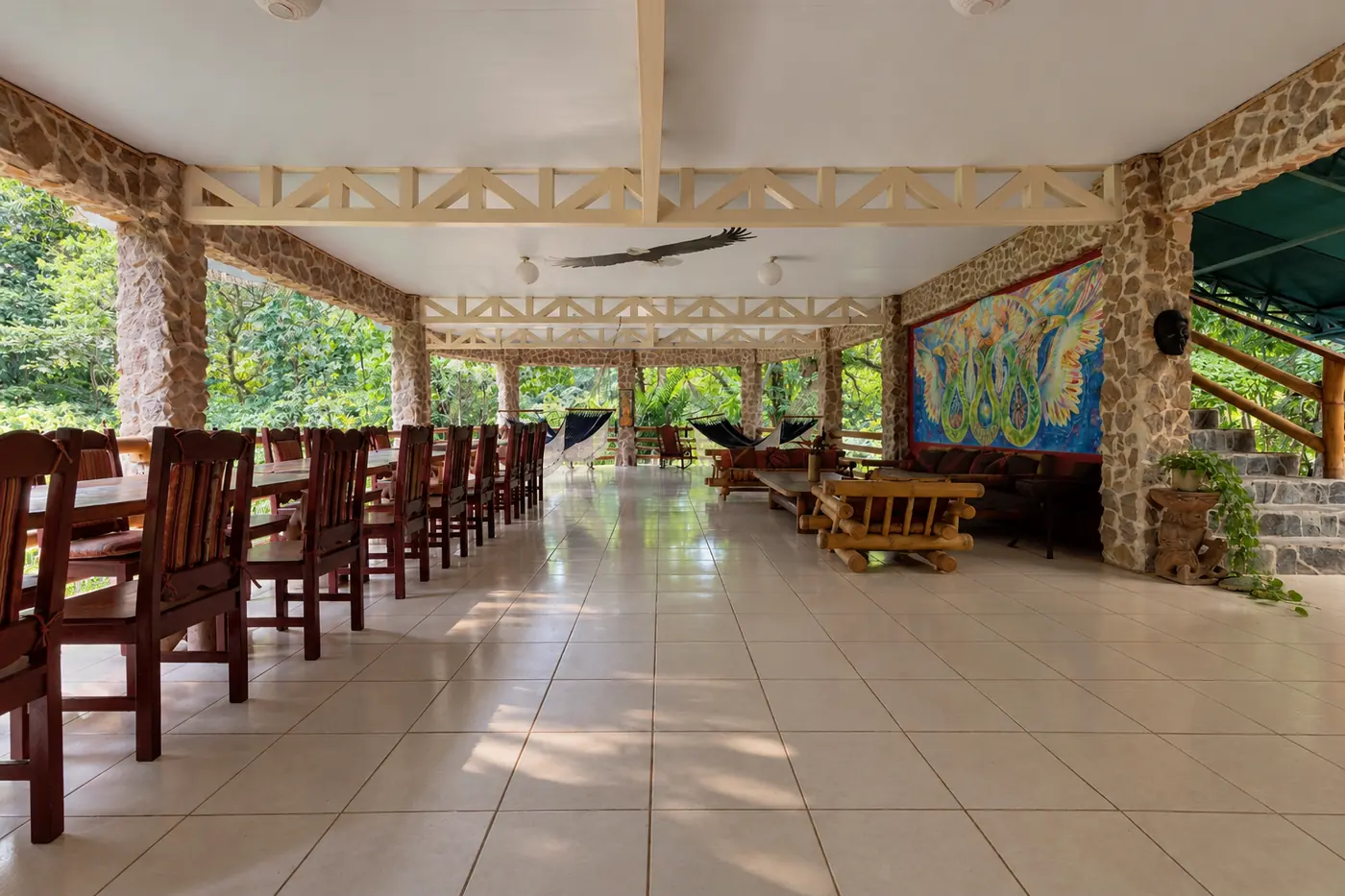
- The dining hall holds 40, and we serve three farm-to-table, organic meals a day.
- We host up to 40 guests in 32 beds, with exclusive use of the property.
- Hosted groups also have access to Eco Era's private reserve lands during their stay, with waterfalls, swimming holes and primary rainforest treks, which gives you easy choices for open afternoons.
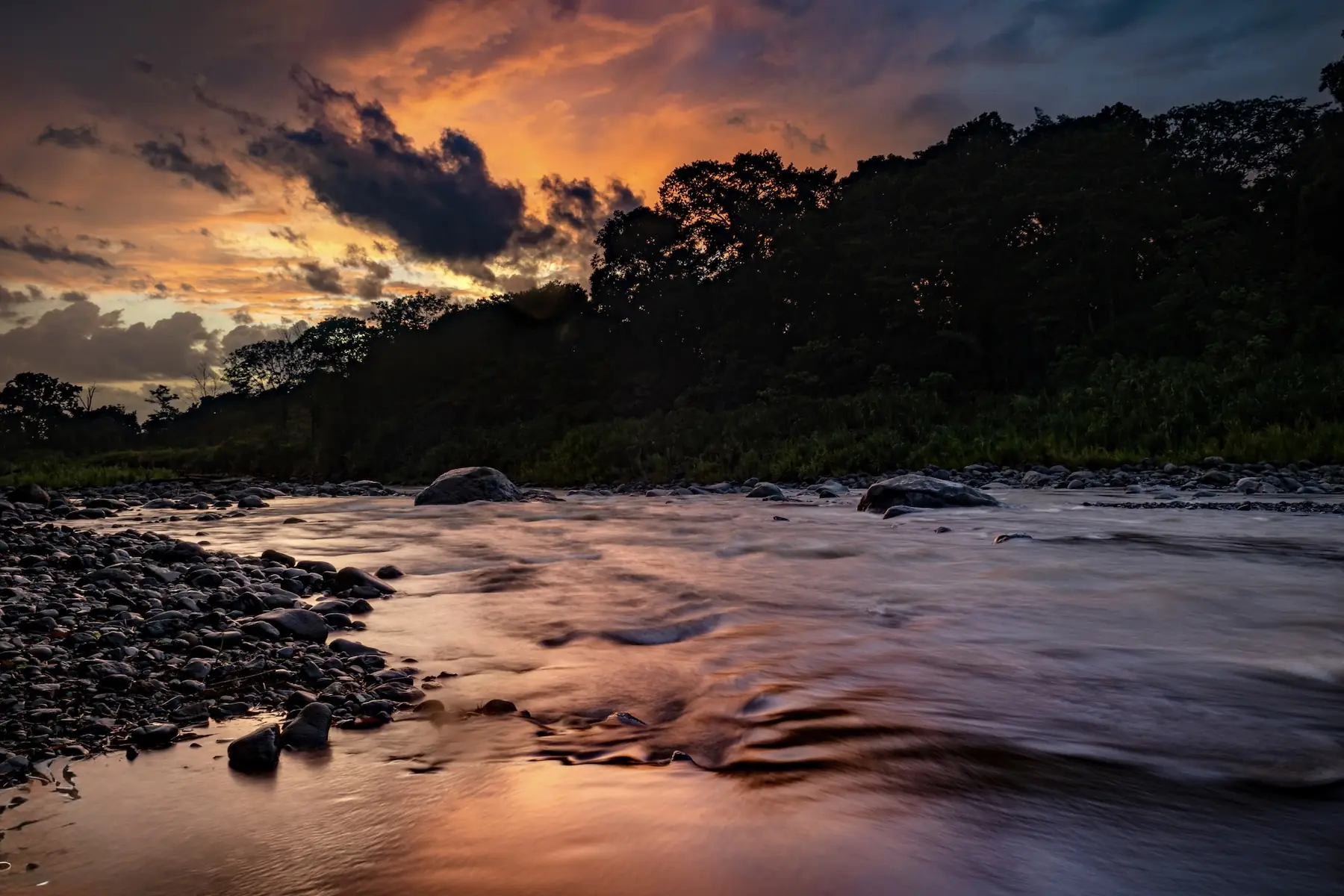
We are on the Naranjo River, eight miles from Manuel Antonio, and the drive from San Jose (SJO) is 2.5 to 4 hours depending on traffic.
A moment to try with your group
Whatever you plan, try this at the start of the first session. Ask everyone to close their eyes if that feels comfortable. For one minute, listen to the sounds around you, one at a time, then notice the breath moving in and out on its own. Open your eyes and let each person say one word about what they heard. It takes two minutes and tends to set the pace for the days that follow.
Questions to ask a venue before you build the schedule
- What spaces can we use for sessions, and how many people does each hold?
- Which spaces are open-air, and what happens when it rains?
- What are the meal times, and how flexible are they?
- Is the property exclusive to our group?
- What is there to do during open time?
Our venue pricing starts from $200 per person per day for 20 to 30 guests and $220 for 12 to 19 guests, with a 12-guest minimum. For groups over 30, please ask us. There are no taxes added, bank wire carries no fee (credit card adds 3%), and financial assistance is available. We currently have open dates in spring 2027, summer 2027 and winter 2028.
Every stay also supports Eco Era, a U.S. 501(c)(3) nonprofit that has worked to protect rainforest in the Cerro Nara mountains since 1991.
Frequently asked questions
What are good retreat activities?
Simple ones: morning movement, sitting practice, a slow walk, one focused teaching session a day, small-group conversation, time by the water and a closing circle. Choose a few that fit your purpose.
How do I write a retreat schedule?
Start with the anchors: morning practice, meals and an evening session. Add one main session a day, leave open time every afternoon and keep the first and last days light.
How many hours of programming per day is right?
Many leaders find three to five hours of guided time a day is plenty. Rest is part of the retreat, not a break from it.
What should a retreat agenda include?
Times, what is optional, meal times and the purpose of each session in a sentence. Send it to guests before they arrive.
Can we talk through our schedule before booking?
Yes. You are welcome to book a free call and we will talk through your dates, the spaces and how a day at the retreat center could flow for your group.
Next steps
If you are building a retreat, you can read about hosting your retreat and pricing, see the facilities and accommodations, or look at our yoga retreat venue.
Host a retreat at Posada NaturaSchedule a free discovery call
With care, The Posada Natura team