
Plant species documented, including some found almost nowhere else
Aguas Claras property and surrounding survey area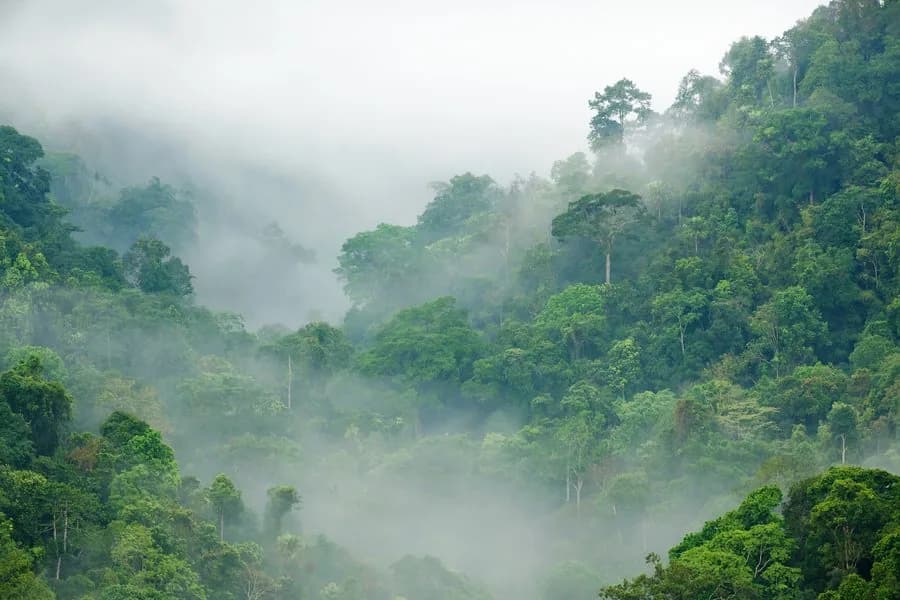
CERRO NARA, COSTA RICA · SINCE 1991
This forest has stood for millennia. Now, its future rests with us.
In the mountains of Costa Rica, the Cerro Nara rainforest shelters 452 plant species, 54 mammals, and the watershed that sustains five downstream communities with clean drinking water. Protected by the same family since 1991, this land remains alive with biodiversity, memory, and care. But protection alone is no longer enough. The research is clear. The urgency is real. Help keep this forest standing for generations to come.
- UNESCO SAVEGRE BIOSPHERE RESERVE
- PASO DE LA DANTA BIOLOGICAL CORRIDOR
- 452 PLANT SPECIES DOCUMENTED
- 166 BIRD SPECIES · 19% OF COSTA RICA'S NATIONAL TOTAL
- 30 AMPHIBIAN SPECIES · 16.3% OF COUNTRY TOTAL
- 4 MILLION+ TONNES CO₂ STORED IN PRIMARY FOREST
- UCR BIOLOGICAL SURVEYS · UNIVERSITY OF COSTA RICA
- 35 YEARS OF CONTINUOUS ACTIVE STEWARDSHIP
- 10,000+ ACRES IN SURROUNDING LANDSCAPE
Planetary Well-Being = Human Well-Being
The mission
35 years of stewardship.
The mission of Eco Era is to protect the 10,000 acres of the Cerro Nara primary rainforest of Costa Rica, while offering individuals the opportunity to reconnect with nature through nature-based wellness programs.
Since 1991, the Caldarelli De Leon family has cared for this land in the mountains of Costa Rica's Central Pacific region, defending it from illegal logging, working alongside Costa Rica's Ministry of Environment, and maintaining round-the-clock stewardship of the forest. The trees still standing here today are standing because someone chose to stay.
The Cerro Nara Protected Zone lies within the UNESCO Savegre Biosphere Reserve and forms part of the Paso de la Danta Biological Corridor, a vital ecological route connecting Manuel Antonio National Park to the Los Santos Forest Reserve. Jaguars, tapirs, and squirrel monkeys pass through these forests as they have for generations.
The rivers born in this watershed provide drinking water to five downstream communities and are considered among the cleanest in Central America.*
Ancient rainforest cannot be replaced within a human lifetime. Once primary forest is lost, it is lost for centuries. Protection works. When people stay, forests survive.
Mammal species, about a quarter of everything Costa Rica has
Aguas Claras property and surrounding survey areaTonnes of CO₂ held in standing primary forest at ~1,036 t/ha
Source estimate for the Aguas Claras primary forestCommunities downstream whose drinking water starts here
Llano Grande watershedYears of active, continuous stewardship by the Caldarelli De Leon family
1991–2026 source claimECOSYSTEM SCIENCE
What the science says about this specific place.
Primary rainforest does things that plantations and restoration projects cannot replicate on any human timescale. The research on Cerro Nara is thorough and the numbers hold up.
The Paso de la Danta. The Path of the Tapir.
Established in 2000, the Paso de la Danta Biological Corridor stretches across more than 82,000 hectares of southern Costa Rica, linking coastal rainforest with mountain cloud forest. Named after the endangered Baird's tapir, the corridor exists to keep wildlife moving through an increasingly fragmented landscape. Jaguars, monkeys, migratory birds, and tapirs still pass through these forests because the connections between them remain intact. The Aguas Claras property sits within one of the corridor's most critical sections.
Without connected habitat, forests become isolated islands. Species lose migration routes, populations shrink, and ecosystems begin to unravel. Biological corridors prevent that collapse. They allow wildlife to move, breed, adapt, and survive.
Since the corridor was established, forest cover across the region has significantly recovered, proof that protection and restoration work when land remains connected.
54%
of Costa Rica's mammal species
Savegre Biosphere Reserve, UNESCO 201759%
of Costa Rica's bird species
Savegre Biosphere Reserve, UNESCO 201720%
of Costa Rica's flora
Savegre Biosphere Reserve, UNESCO 201771
endemic plant species, nowhere else on earth
Savegre Biosphere Reserve, UNESCO 2017- 01Manuel Antonio National Park
- 02Aguas Claras Property & Cerro NaraThis land
- 03Los Santos Forest Reserve
- 04Savegre River Basin & Quetzales National Park
- 05Corcovado National Park → La Amistad → Mesoamerica
Four million tonnes. In living wood and soil.
The primary forest on the Aguas Claras property stores an estimated 4 million-plus tonnes of CO₂ at roughly 1,036.7 tonnes per hectare. For reference, the average American car emits about 4.6 tonnes a year. We're talking about over 800,000 cars' annual emissions, held right now in wood and root systems and decomposing matter.
This is not a reforestation credit or a promise of future sequestration. It's carbon that accumulated over centuries in a standing forest. If this land is cleared, that carbon is released. Primary forest cannot be regrown on any human timescale.
Tree transpiration also recycles precipitation back into the atmosphere. Clearing the forest here reduces rainfall across the broader region. The climate effects of deforestation travel well beyond the cleared land.
These property-level estimates and water findings are preserved from Eco Era’s published source. The underlying inventories and test tables were not linked; see Sources & verification below.
4M+
Carbon stored here
Tonnes of CO₂ in standing primary forest. The equivalent of taking 800,000 cars off the road for a year, permanently, in living wood and ancient soil.7,000mm
Annual rainfall at Cerro Nara
Among the wettest zones in Costa Rica. That rainfall is what makes the forest so carbon-dense, and also why intact cover matters so much for the slopes. Without the root systems, this terrain erodes badly.These ecosystems create clean drinking water.
More than half of the Llano Grande watershed lies within the Aguas Claras forest. From these mountains, water flows into the Naranjo and Savegre river systems, two of the cleanest river networks in Central America. The forest acts as a living filtration system. Tree roots slow rainfall, stabilize soil, and feed water deep into the limestone aquifer that supplies drinking water to communities including Londres, Naranjito, and Villanueva.
Scientific water testing across the region found pH, nitrates, chlorides, and alkalinity all within healthy natural ranges and safely below drinking water limits.
If these forests are cleared, the watershed changes immediately. Sediment increases, aquifers weaken, and water quality declines downstream. Healthy rivers begin in intact forests.
These property-level estimates and water findings are preserved from Eco Era’s published source. The underlying inventories and test tables were not linked; see Sources & verification below.
5
Communities supplied by this watershed
2
Major river systems originating here
>50%
Of Llano Grande stream drainage originates within the property
#1
Among cleanest river systems in Central America
- 01Llano Grande stream
- 02El Maestro stream
- 03Brujito stream
- 04Salitrillo stream
What this forest is actually doing.
A healthy forest isn't passive. Every species in it is doing something. The system is self-regulating, constantly regenerating, filtering its own water, and managing its own climate. That only works when the pieces are all present. Click through to see how.
Living system
Seed dispersal and forest regeneration
Bats, 62% of mammal diversity here, disperse thousands of seeds every night across distances up to 10 km. Frugivorous birds carry seeds that wind can't move. Tapirs and primates do more of the same. Pull any part of this out and the forest loses its ability to regenerate.
Living system
Predator–prey regulation
Jaguars, pumas, and ocelots are documented in this corridor. When apex predators are present, every level of the food web below them is functioning. Overgrazing doesn't happen. Plant communities stay structured. The cascade goes all the way down.
Living system
Water filtration and aquifer recharge
The forested slopes here intercept rainfall, slow it down, and push it into the karst limestone aquifer supplying five communities. Remove the forest from those recharge zones and the aquifer quality drops and yield declines. No engineered system does this at scale, for free, continuously.
Living system
Pollination networks
The orchid richness on this property, multiple miniature species, several endemic to the region, is a useful indicator here. Orchids are among the most specialized plants in terms of their pollinator relationships. High orchid diversity means the pollinator community is genuinely complex and intact.
Living system
Regional climate stabilization
Tree transpiration recycles water back into the atmosphere and stabilizes rainfall patterns across the broader region. Research consistently shows that deforestation reduces rainfall even in areas distant from where the clearing happened.
Living system
Altitudinal migration corridor
The property spans 250 to 1,100 meters, and that range matters. Resplendent quetzals and three-wattled bellbirds migrate vertically with the seasons, and they need intact forest at every elevation they pass through. This corridor gives them that.
DOCUMENTED SPECIES
Without connected habitat, many of these species disappear. This corridor gives them room to survive and move freely.
Filter by group below. Every species listed comes from multi-year biological surveys conducted by the University of Costa Rica on and around the Aguas Claras property.
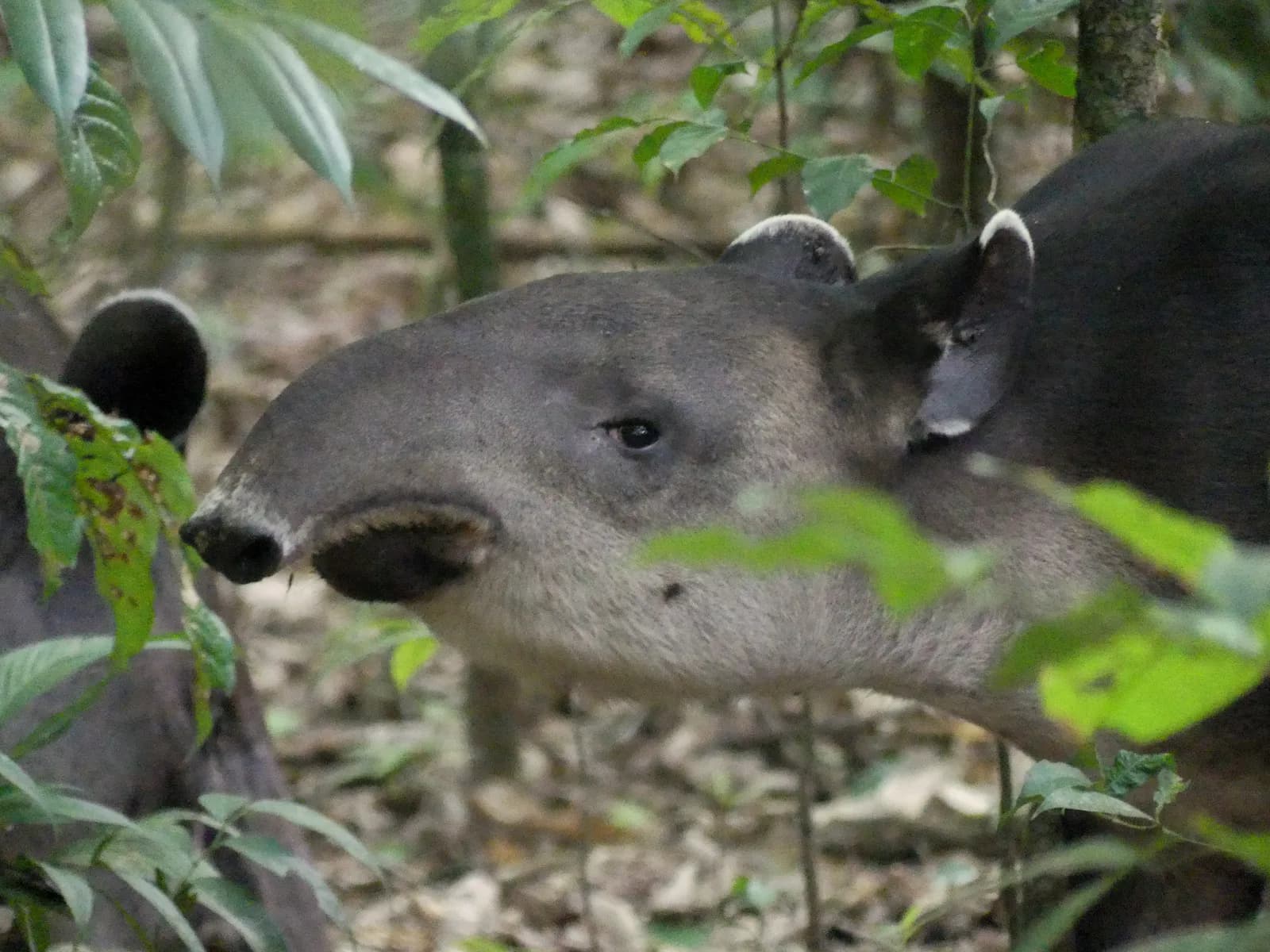
01
Baird's Tapir
Tapirus bairdiiThe largest land mammal in Central America. Fewer than 5,500 remain in the wild across their entire range. The corridor is literally named for this animal. CITES Appendix I.
Photo: Paul10011993 · CC0 1.0 · resized and visually cropped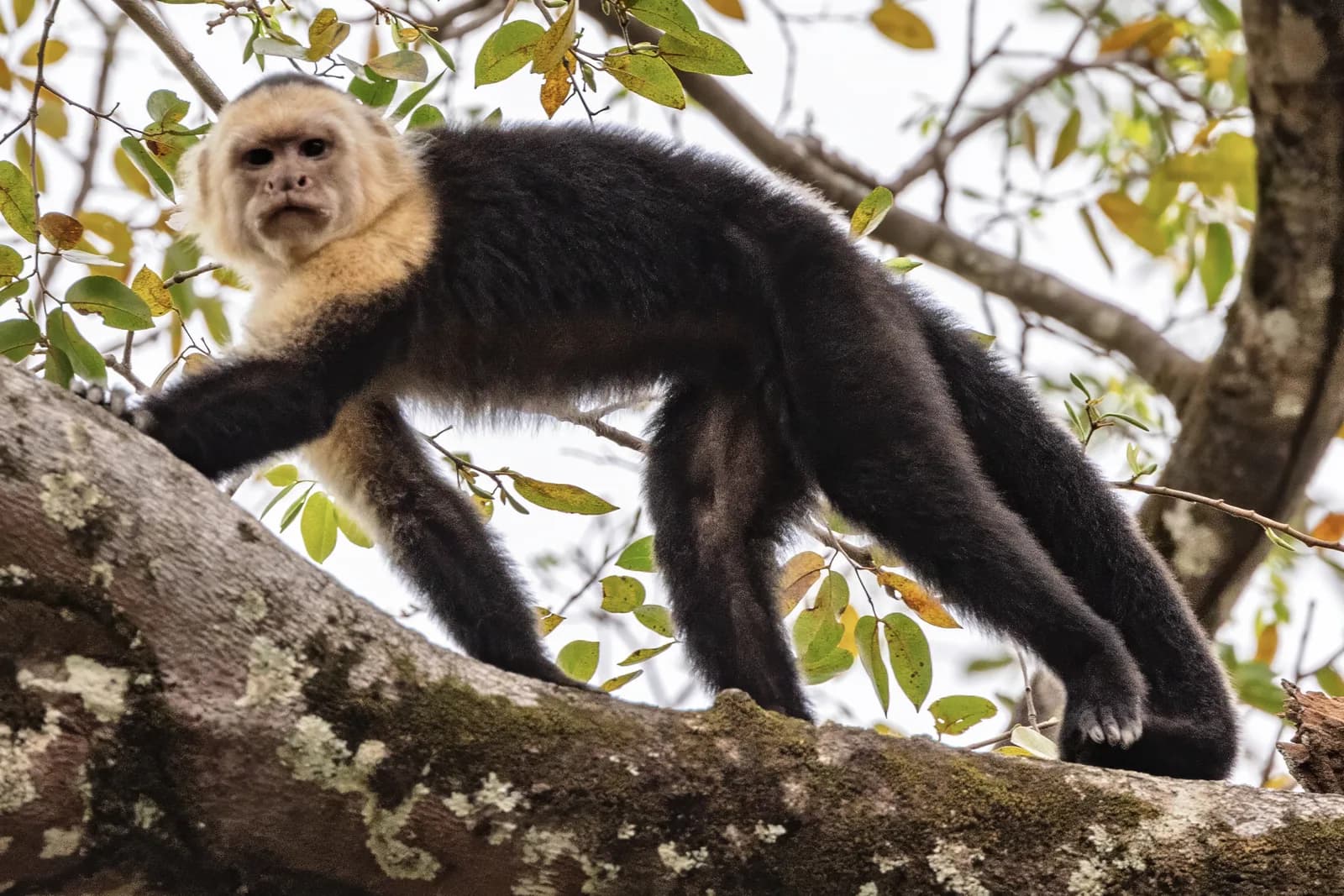
02
White-faced Capuchin
Cebus imitatorOne of 54 mammal species documented here. Highly intelligent, socially complex, dependent on intact forest canopy for its entire life cycle.
Photo: scott_young · CC0 1.0 · resized and visually cropped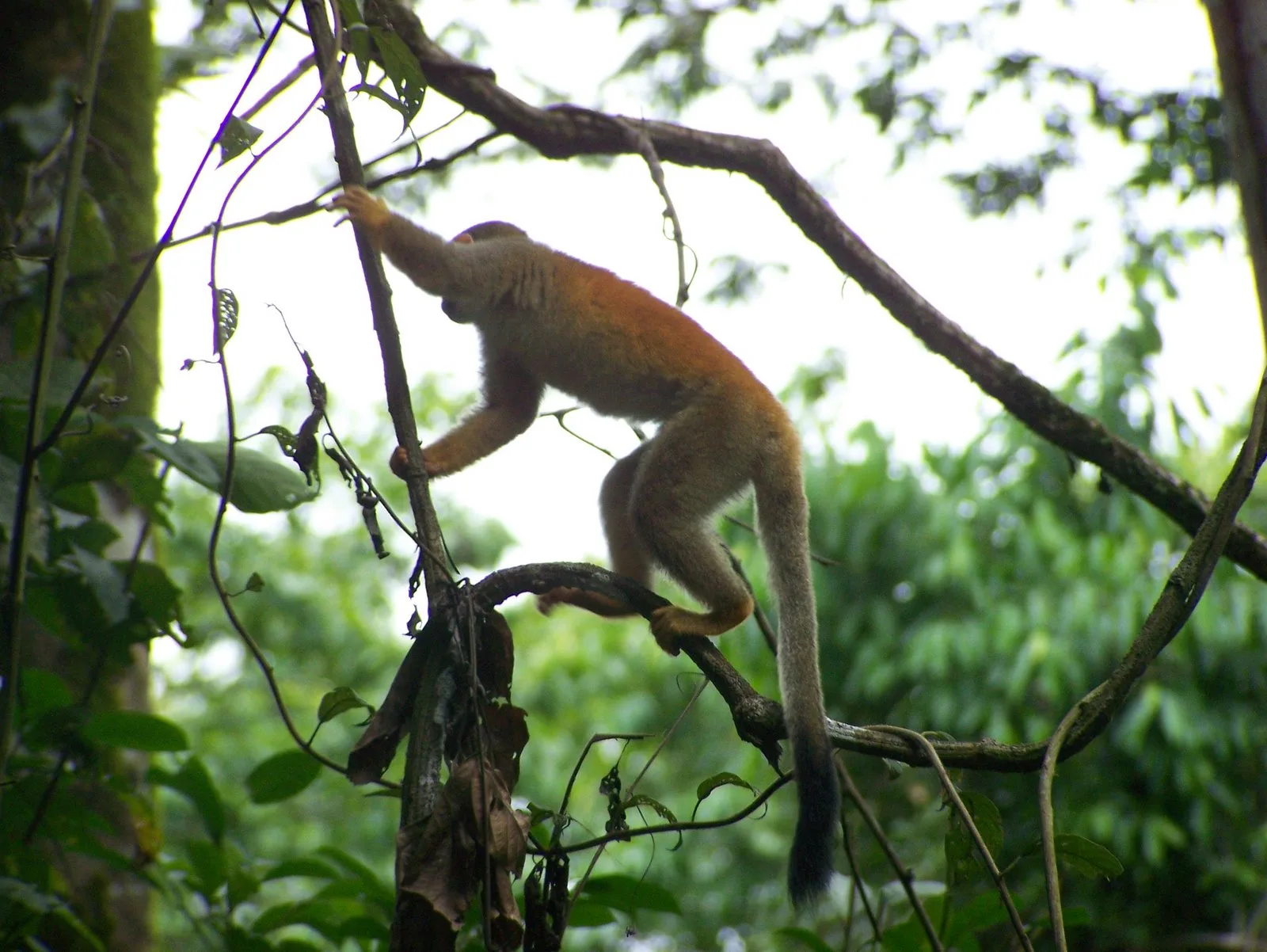
03
Central American Squirrel Monkey
Saimiri oerstedii citrinellusPopulation fallen from ~200,000 in the 1970s to 1,500–2,000 today. Found only in this stretch of Costa Rica's Central Pacific coast. Cannot survive in fragmented habitat. CITES Appendix I.
Photo: Michelle Reback · CC BY-SA 4.0 · resized and visually cropped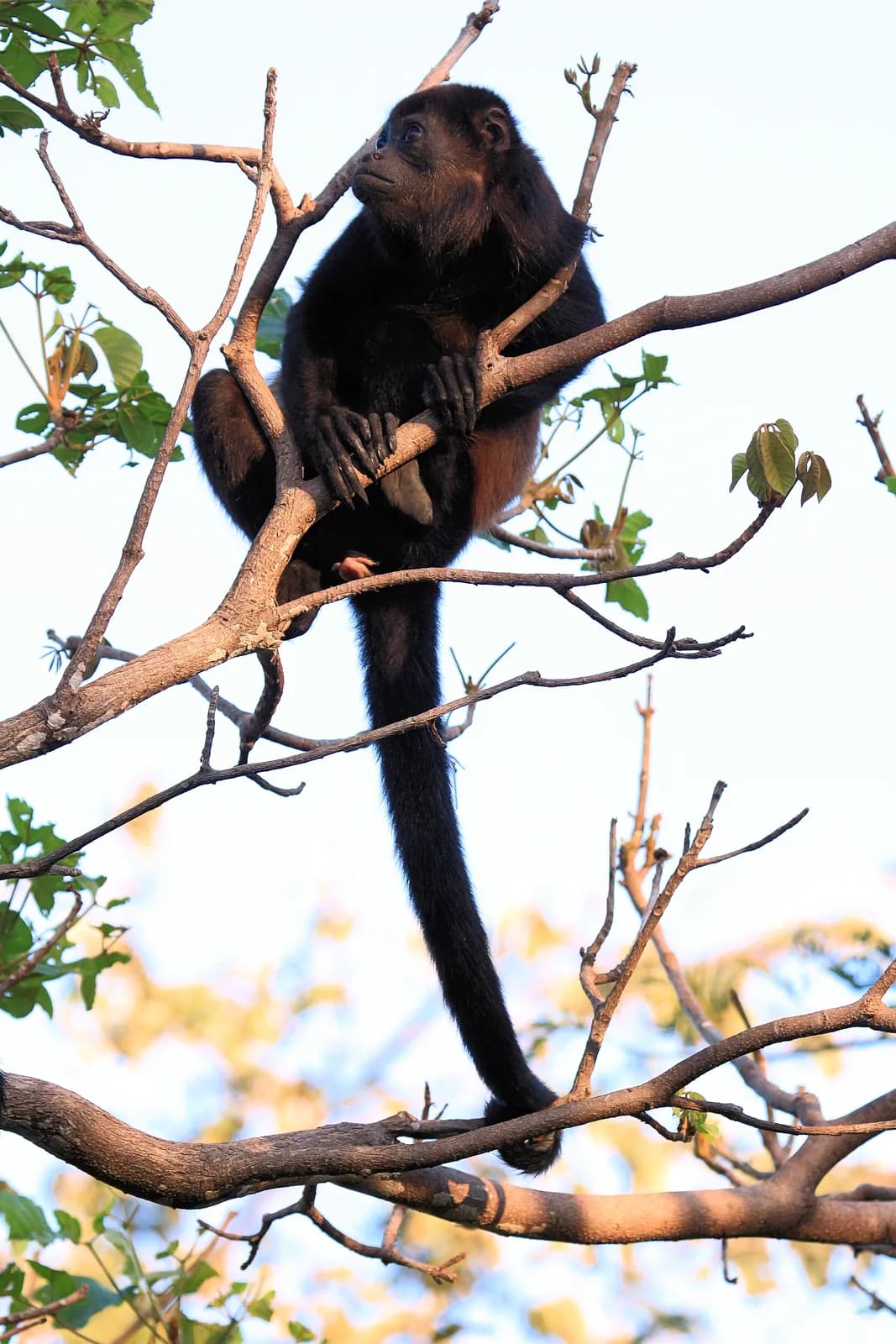
04
Mantled Howler Monkey
Alouatta palliataTheir call carries for miles through the canopy. If you can hear howler monkeys, the forest is intact enough to support them, which tells you something real about the ecosystem.
Photo: Paul Harrison · CC BY-SA 4.0 · resized and visually cropped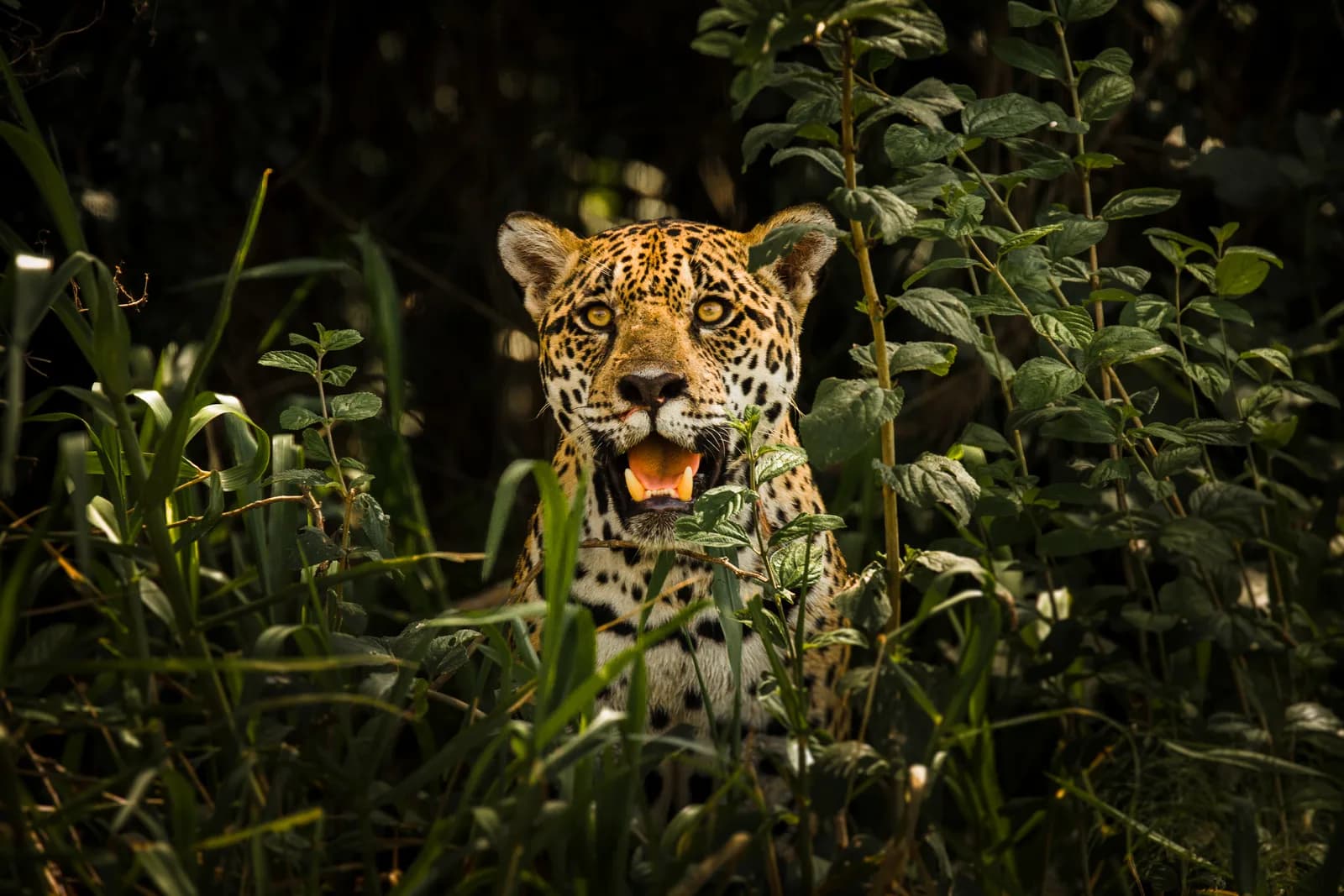
05
Jaguar
Panthera oncaDocumented in the Paso de la Danta corridor. Needs 50–100km² of connected habitat. Their presence means the system is intact enough to support apex predators. CITES Appendix I.
Photo: Leonardo Ramos · CC BY-SA 4.0 · resized and visually cropped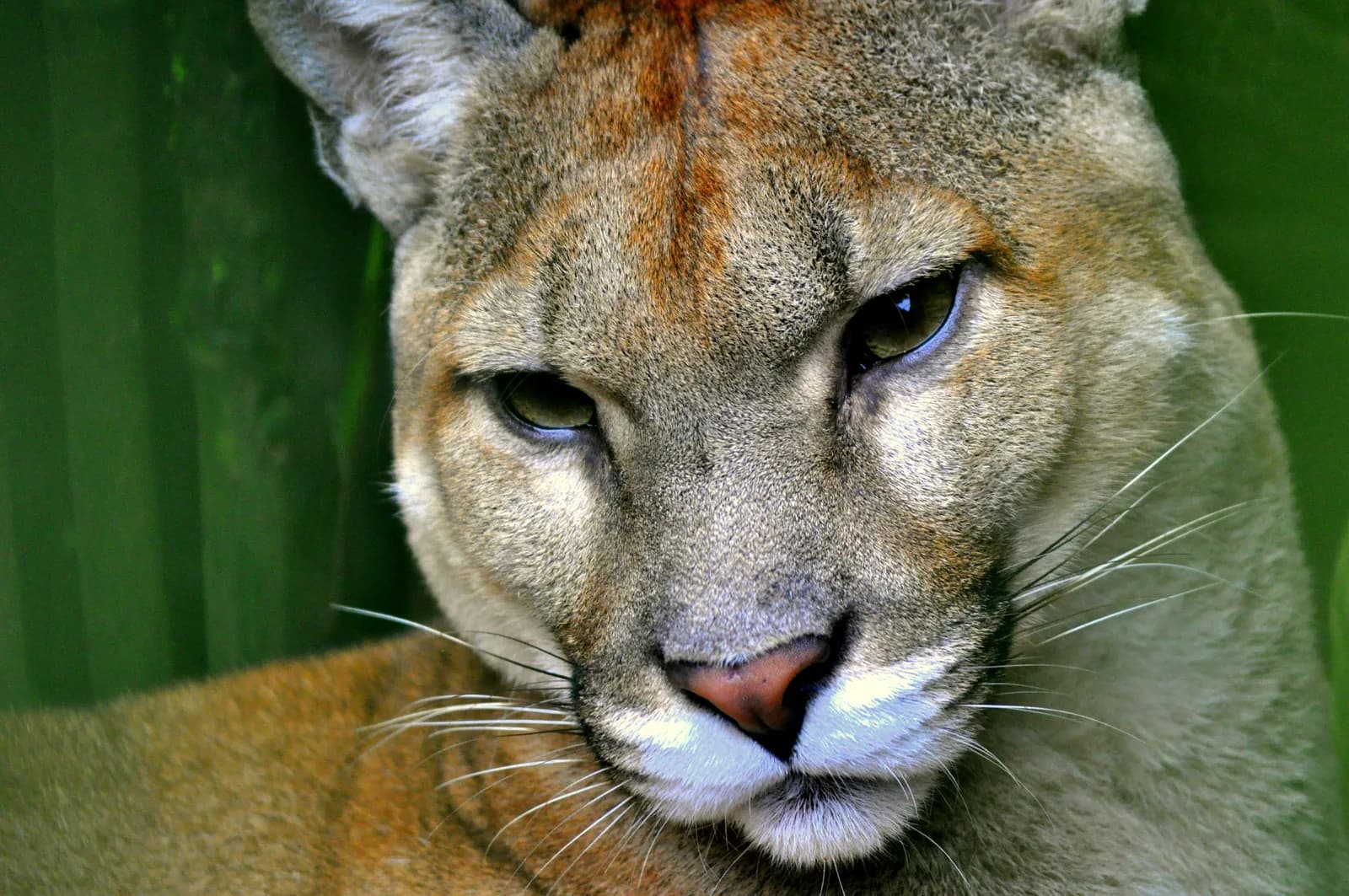
06
Puma
Puma concolorDocumented in the Cerro Nara corridor alongside jaguars and ocelots. Regulates prey populations and keeps the food web structured below it.
Photo: Sarah Murray · CC BY-SA 2.0 · resized and visually cropped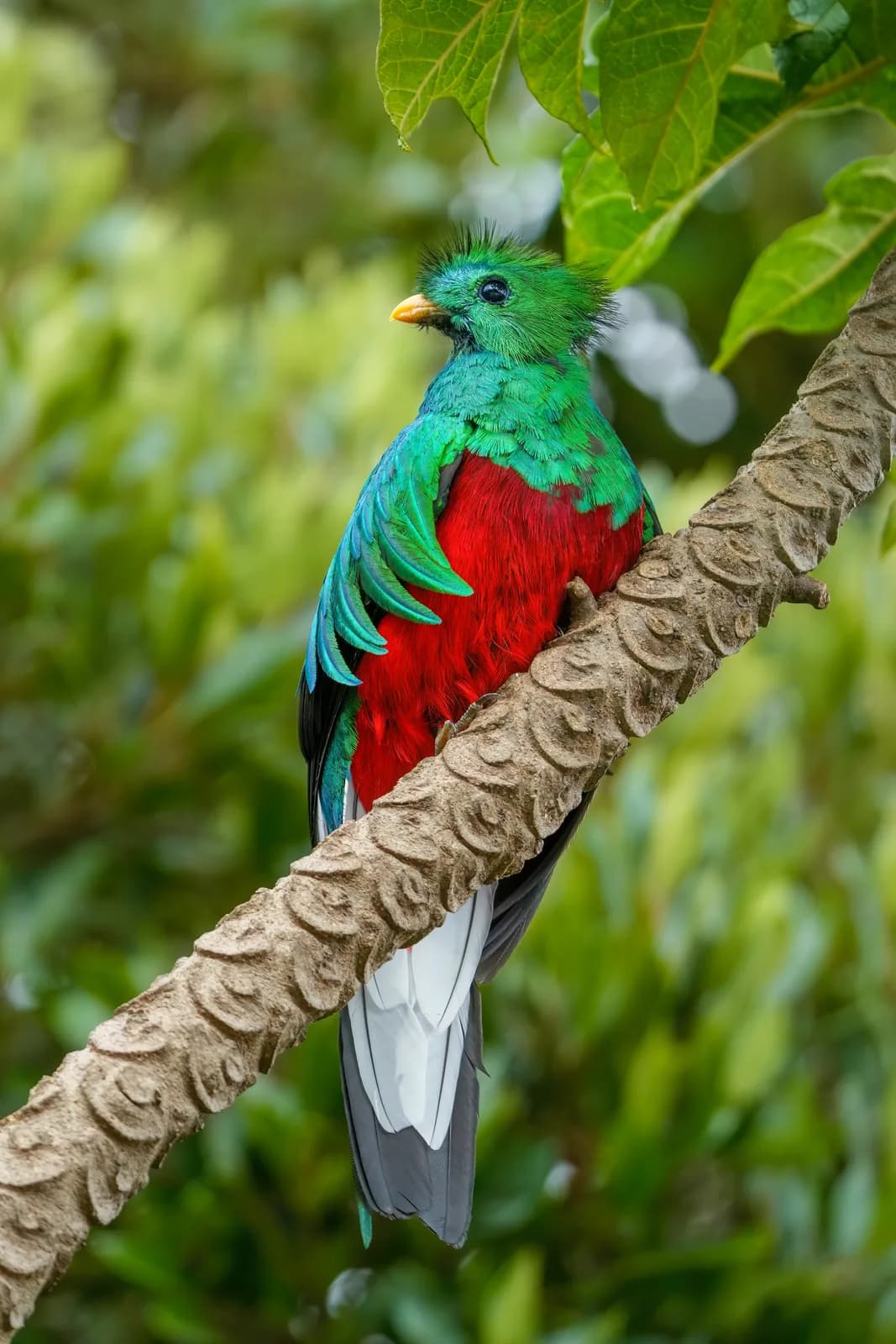
07
Resplendent Quetzal
Pharomachrus mocinnoMoves seasonally between elevations and needs intact forest the whole way through. Its presence here is evidence the corridor is functioning across the full altitudinal gradient.
Photo: Giles Laurent · CC BY-SA 4.0 · resized and visually cropped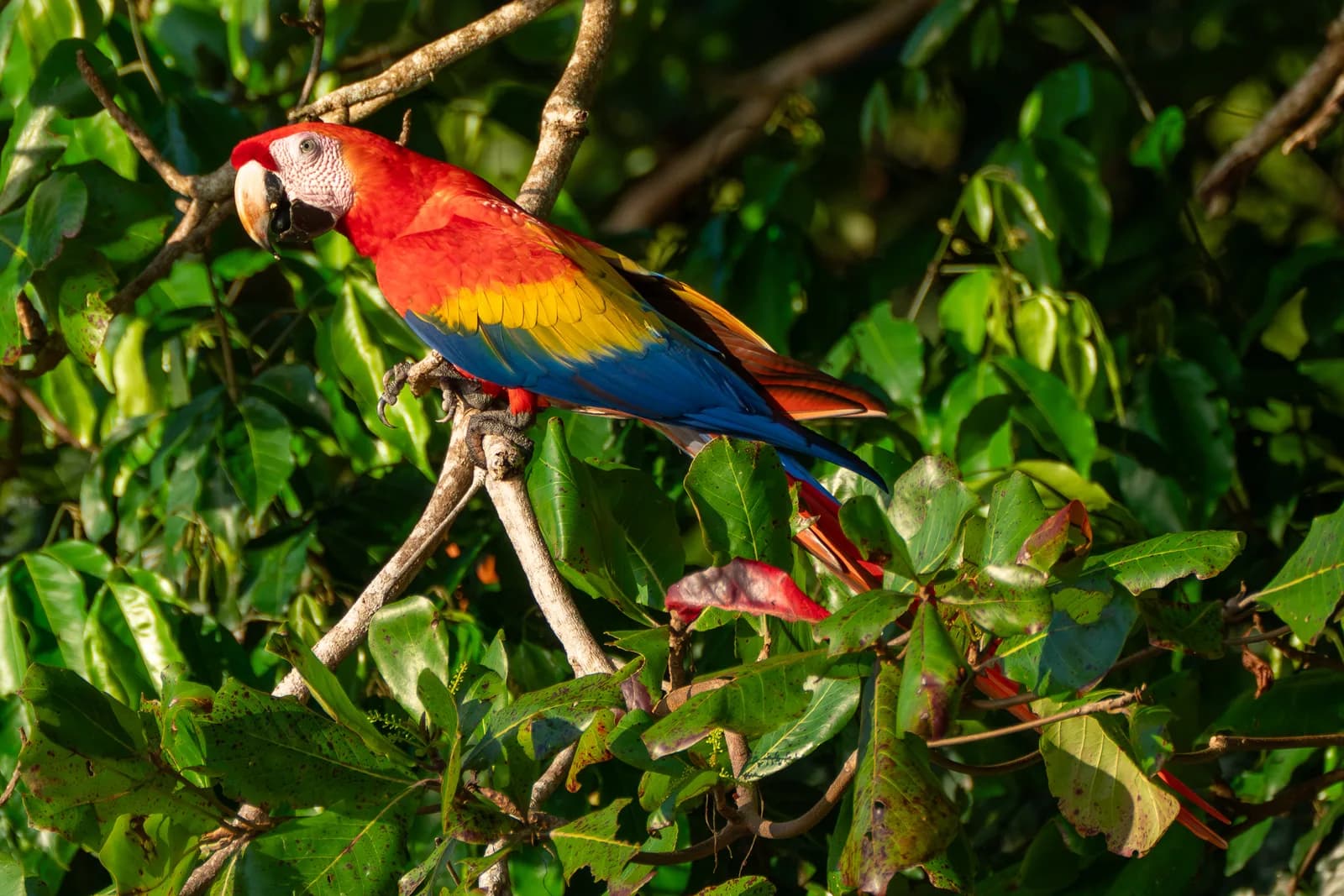
08
Scarlet Macaw
Ara macaoRequires large, undisturbed forest patches for nesting. Costa Rica has made enormous conservation investments partly for this species. It does well here.
Photo: Satdeep Gill · CC BY-SA 4.0 · resized and visually cropped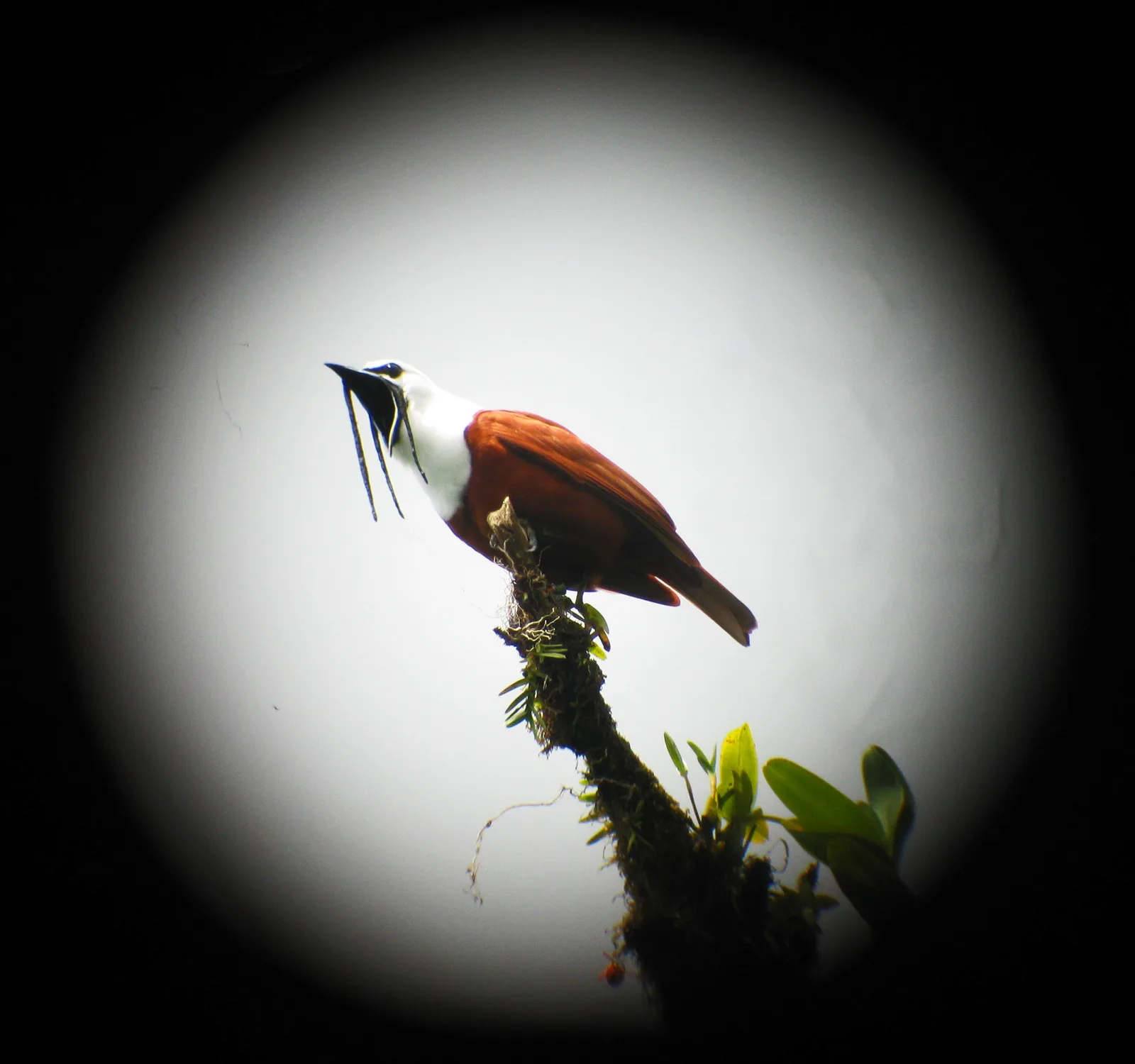
09
Three-wattled Bellbird
Procnias tricarunculatusFrugivore and altitudinal migrant. One of 16 formally protected bird species documented at Aguas Claras. Its distinctive call is one of the more disorienting sounds in the forest.
Photo: Ryan Kozie · CC BY 2.0 · resized and visually cropped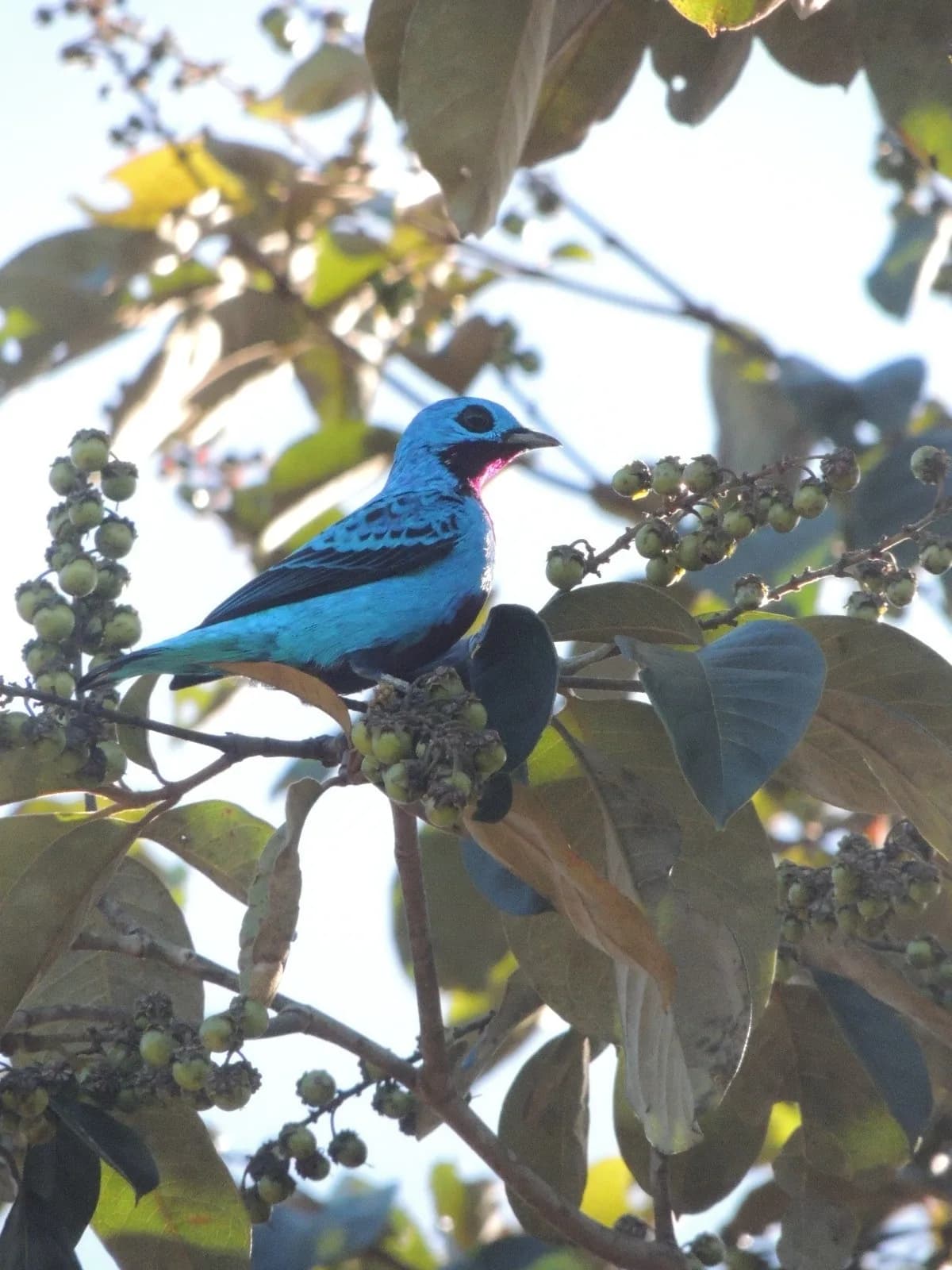
10
Turquoise Cotinga
Cotinga ridgwayiThreatened by habitat fragmentation and hunting. Observed specifically near Salitrillos on the Aguas Claras property, using this area for food and seasonal movement.
Photo: Anthony Mora Aguilar · CC BY 4.0 · resized and visually croppedVerified record · no substitute imageOophaga granulifera
11
Strawberry Poison Dart Frog
Oophaga granuliferaProtected under Costa Rican wildlife law. One of 8 threatened amphibian species on the property. Its presence reliably indicates healthy, undisturbed forest conditions.
12
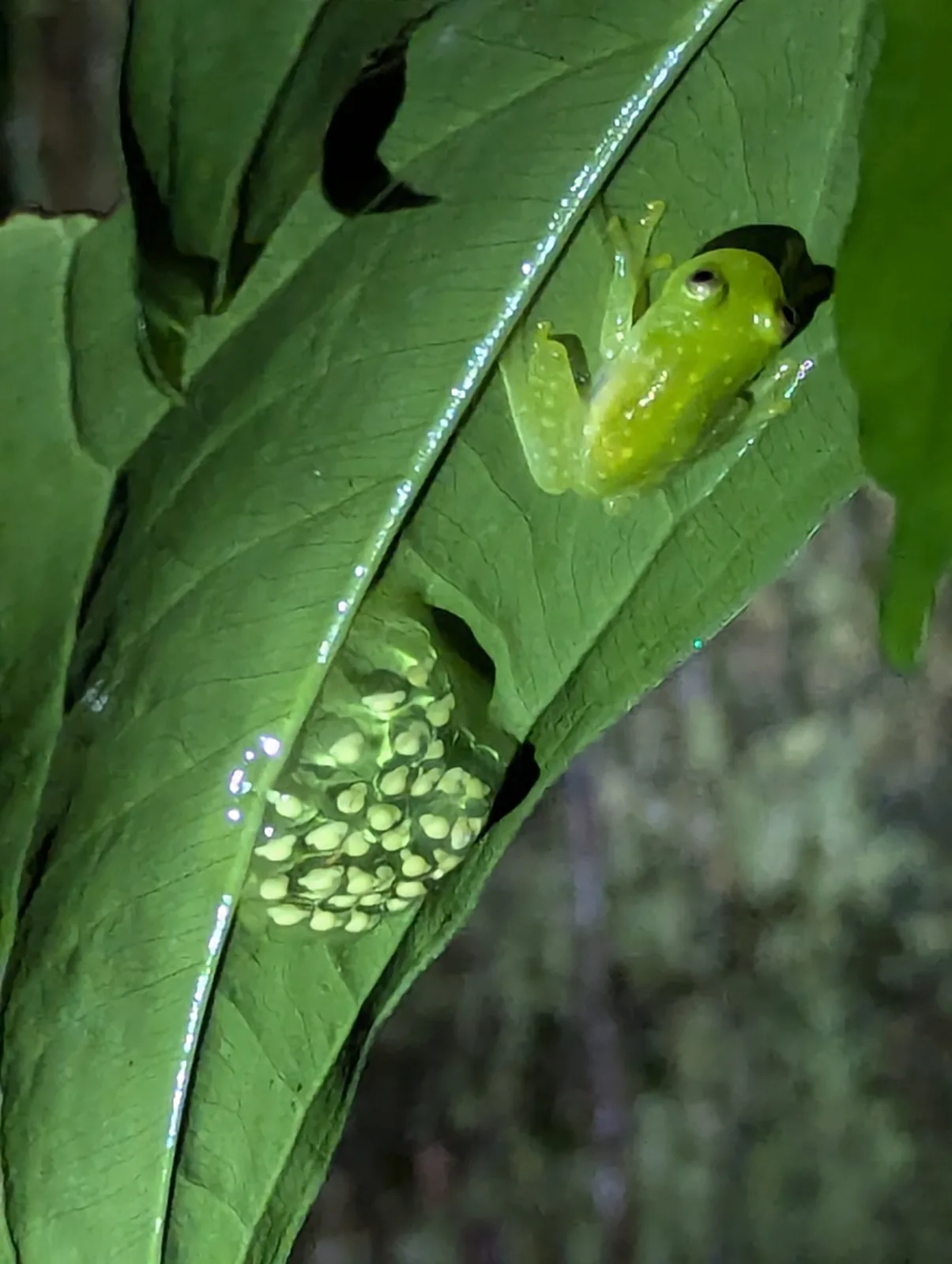
Glass Frog
Hyalinobatrachium fleischmanniLives near streams, lays eggs on leaves above water. Found throughout the property from 300–1,100m. A reliable indicator of water quality and riparian health.
Photo: Tom and T Herman · CC BY 4.0 · resized and visually croppedVerified record · no substitute imageEpidendrum montis-narae
13
Cerro Nara Orchid
Epidendrum montis-naraeFound in this region and almost nowhere else on the planet. One of several plant species documented at Cerro Nara whose range barely extends beyond this landscape.
14
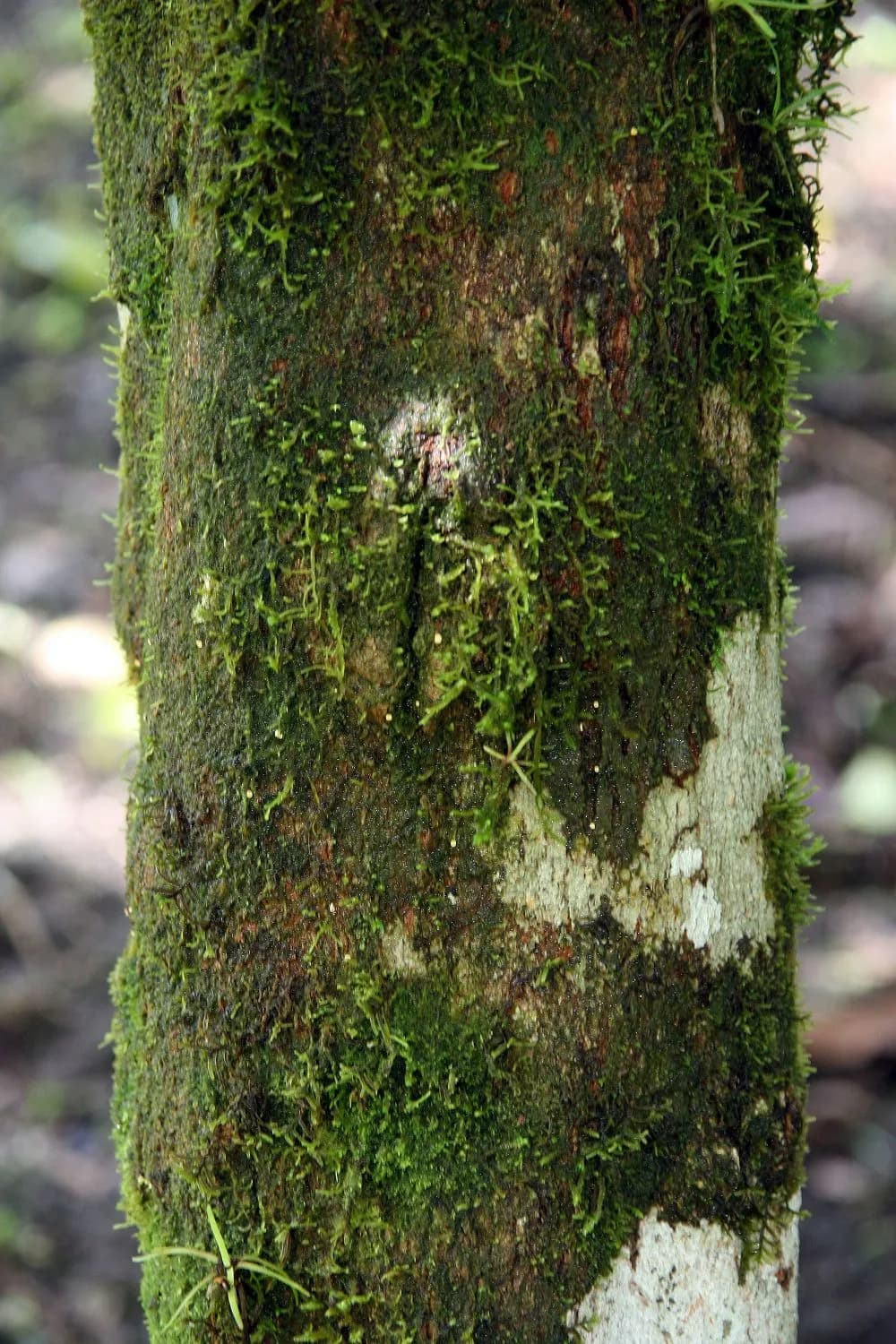
Manú
Minquartia guianensisEndangered timber tree specifically targeted by illegal loggers because of its commercial value. Protecting it is one of the real, daily reasons caretakers need to be on this land year-round.
Photo: David J. Stang · CC BY-SA 4.0 · resized and visually cropped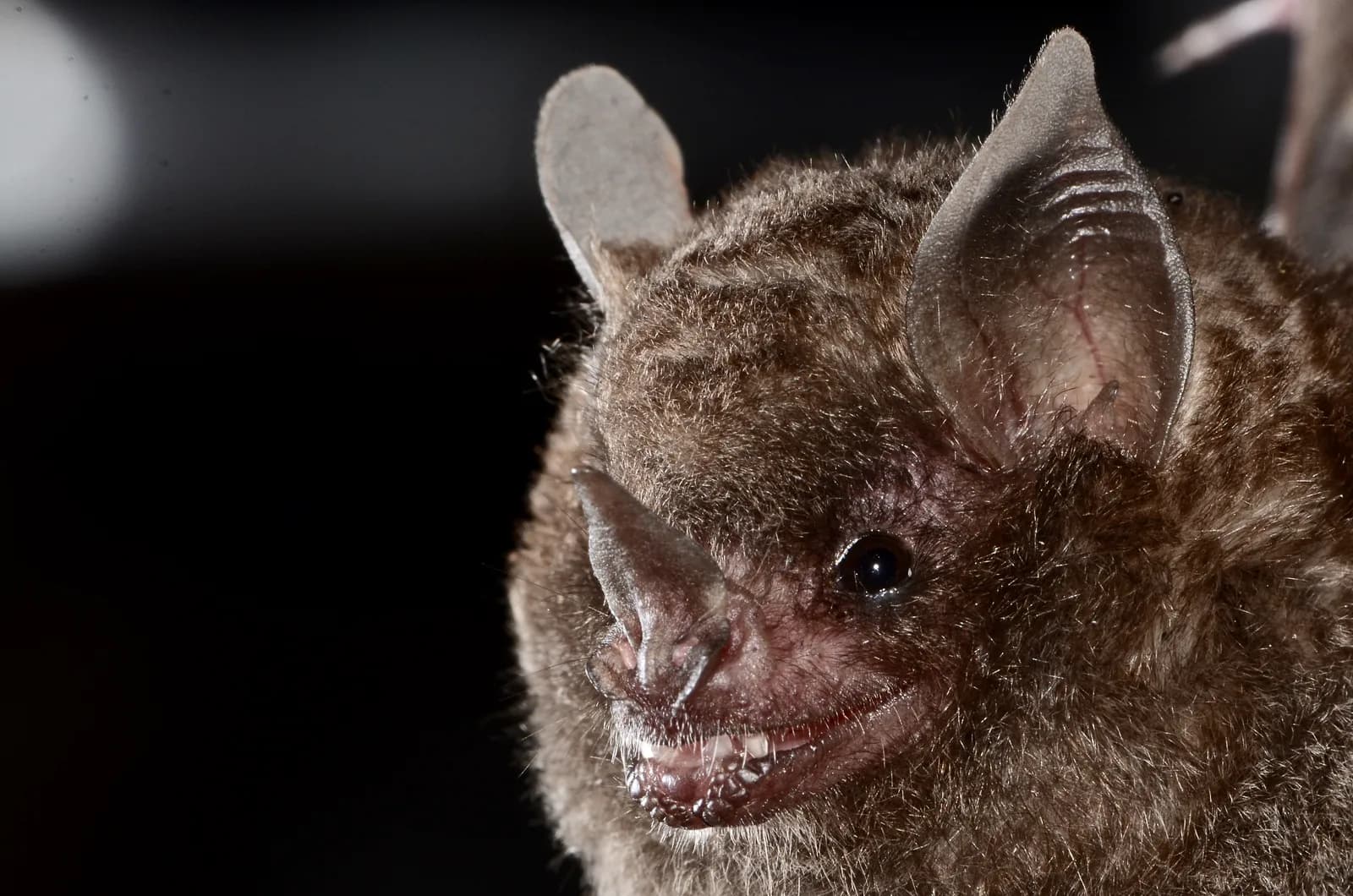
15
Bats (Multiple Species)
Carollia, Artibeus, Sturnira mordax and othersSixty-two percent of all mammal diversity. Each individual disperses thousands of seeds per night over a range of up to 10 km. Without them, the forest cannot regenerate.
Photo: Desmodus · CC BY-SA 4.0 · resized and visually cropped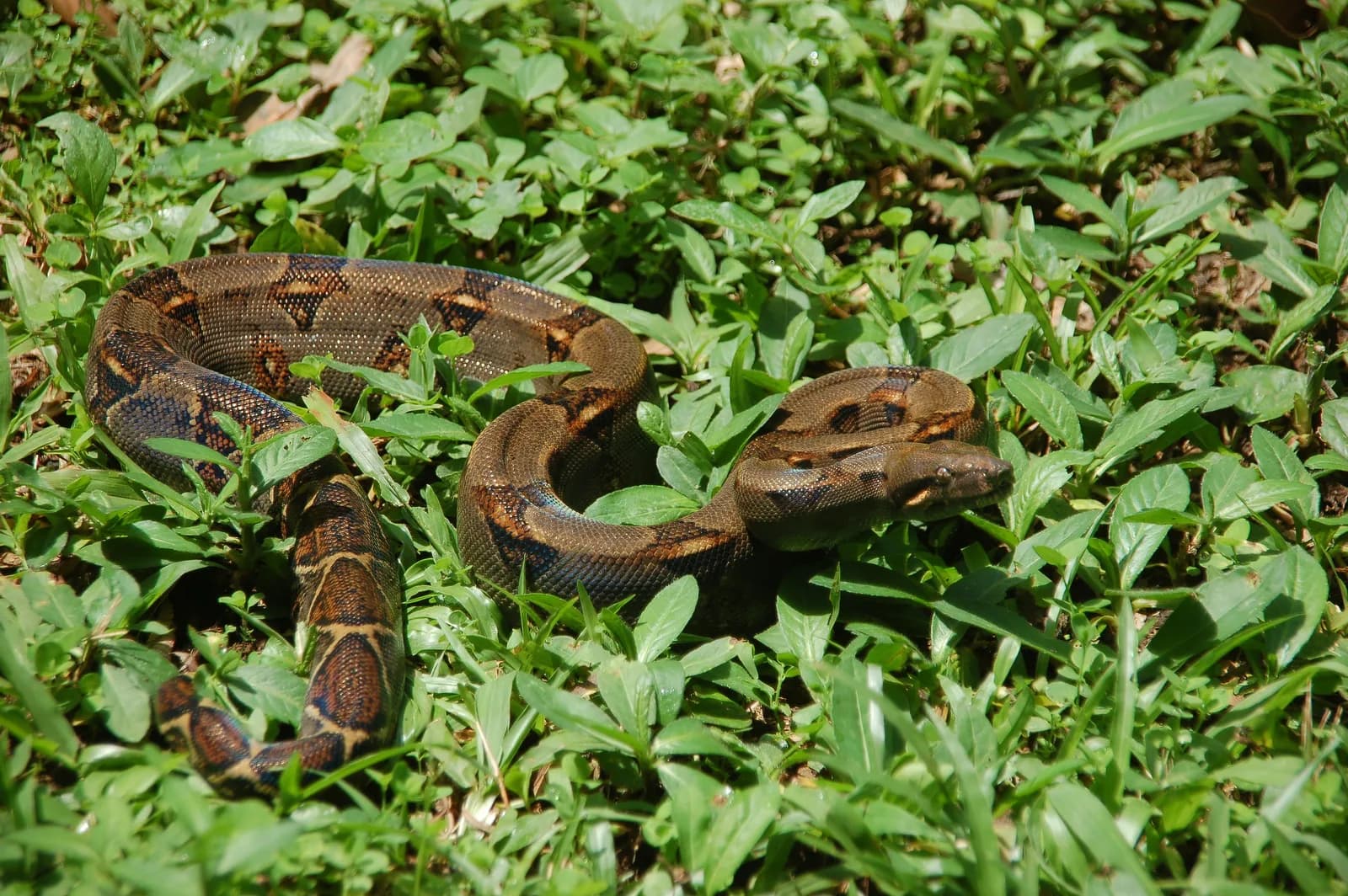
16
Boa Constrictor
Boa constrictorThe sole formally protected reptile species documented in the survey. Regulates populations of small mammals and birds. One of 35 reptile species here.
Photo: Matthias Bethke · CC BY-SA 4.0 · resized and visually croppedSource: UCR biological surveys · Aguas Claras management plan
Featured wildlife images are explicitly licensed Wikimedia Commons photographs with creator and license links on every card. They are illustrative, not claimed as on-site sightings. No substitute image is used for the precisely named Cerro Nara orchid. Read the source-integrity notes.
Research archive · source preservedExplore the complete conservation inventorySearch every priority record without interrupting the main conservation story.
Deep research layer
Every record remains available, on demand.
The featured field guide above is the concise story. This archive preserves the complete source inventory for researchers, donors, facilitators, and guests who want the underlying detail.
71 of 71 entries shown
Mammals (key species)19 records+
- 01Baird's TapirTapirus bairdii · Endangered · CITES I
- 02JaguarPanthera onca · Vulnerable · CITES I
- 03PumaPuma concolor · Documented
- 04OcelotLeopardus pardalis · Documented
- 05Central American Squirrel MonkeySaimiri oerstedii · Endangered · CITES I
- 06White-faced CapuchinCebus capucinus
- 07Mantled Howler MonkeyAlouatta palliata
- 08Neotropical River OtterLontra longicaudis
- 09Three-toed SlothBradypus variegatus
- 10Collared PeccaryPecari tajacu
- 11White-lipped PeccaryTayassu pecari
- 12KinkajouPotos flavus
- 13CacomistleBassariscus sumichrasti
- 14AgoutiDasyprocta punctata
- 15ArmadilloDasypus novemcinctus
- 16Bats: Carollia spp.Seed disperser · up to 10km nightly
- 17Bats: Artibeus spp.Seed disperser · large range
- 18Bats: Sturnira mordaxFruit bat · forest regeneration
- 1954 species total~25% of all Costa Rican mammals
Birds (protected / conservation-priority)18 records+
- 01Resplendent QuetzalPharomachrus mocinno · Vulnerable
- 02Scarlet MacawAra macao · Protected
- 03Three-wattled BellbirdProcnias tricarunculatus · Protected
- 04Turquoise CotingaCotinga ridgwayi · Protected
- 05Great CurassowCrax rubra · Protected
- 06Crested GuanPenelope purpurascens
- 07King VultureSarcoramphus papa
- 08Baird's TrogonTrogon bairdii · Regional endemic
- 09Great TinamouTinamus major
- 10White-crowned ParrotPionus senilis · Protected
- 11Wood QuailOdontophorus gujanensis · Protected
- 12Crimson-collared TanagerRamphocelus passerinii · Most abundant species
- 13Hummingbirds (multiple spp.)Pollinators · nectar feeders
- 14Toucans (multiple spp.)Frugivores · seed dispersers
- 15Willow FlycatcherEmpidonax traillii · Latitudinal migrant
- 16Flame-throated WarblerParula gutturalis · Altitudinal migrant
- 17166 species total~19% of Costa Rica's national total
- 1816 formally protected speciesShannon diversity index: 4.63
Amphibians & Reptiles16 records+
- 01Strawberry Poison Dart FrogOophaga granulifera · Threatened
- 02Glass FrogHyalinobatrachium fleischmanni · Protected
- 03ToadIncilius melanochlorus · Protected
- 04Tree FrogPtychohyla legleri · Protected
- 05Rain FrogCraugastor noblei · Protected
- 06Rain FrogCraugastor podiciferus · Protected
- 07Rain FrogCraugastor fitzingeri · Most abundant amphibian
- 08Tree FrogDendropsophus microcephalus · Protected
- 09Hylidae tree frogs (9 species)Most diverse amphibian family here
- 1030 amphibian species total16.3% of Costa Rica's total
- 118 threatened amphibian speciesShannon diversity: 2.29
- 12Arboreal LizardCorytophanes cristatus
- 13Bird-eating SnakePseustes poecilonotus
- 14Vine SnakeOxybelis spp.
- 1535 reptile species total16.8% of Costa Rica's reptiles
- 1610 reptile families representedShannon diversity: 2.86
Plants (endemic, rare, endangered)18 records+
- 01Ruellia norvegigratiosaEndemic shrub · riparian habitat
- 02Epidendrum montisnaraeEndemic orchid · extremely limited range
- 03Parathesis acostensisEndemic shrub · rare
- 04Panopsis acostanusEndemic canopy tree · rare
- 05Eugenia teresaeEndemic · rare
- 06Minquartia guianensis (Manú)Endangered timber tree
- 07Caryocar costarricense (Ajo)Endangered · limited range
- 08Ruptiliocarpon caracolitoRare · high conservation value
- 09Pleodendron costarricenseExtremely rare evolutionary lineage
- 10Brunellia hygrothermicaShared only with Osa Peninsula
- 11Couratari scottmoriiEndemic to Osa and Cerro Nara only
- 12Warrea costaricensisRare orchid · limited distribution
- 13Parabignonia steyermarkiiClimbing liana · restricted range
- 14Stemmadenia simulansLimited distribution
- 15New Rubus speciesDescribed for first time on this property
- 16New Mortoniodendron speciesNot previously recorded anywhere
- 17452 plant species totalIncluding protected miniature orchids
- 1871 regional endemic plant speciesSavegre Biosphere Reserve, UNESCO
NATURE + HUMAN HEALTH
Two expressions of the same mission.
The health of this forest and the health of the people who enter it are not separate things. Click either card to explore.
NATURE HEALTH
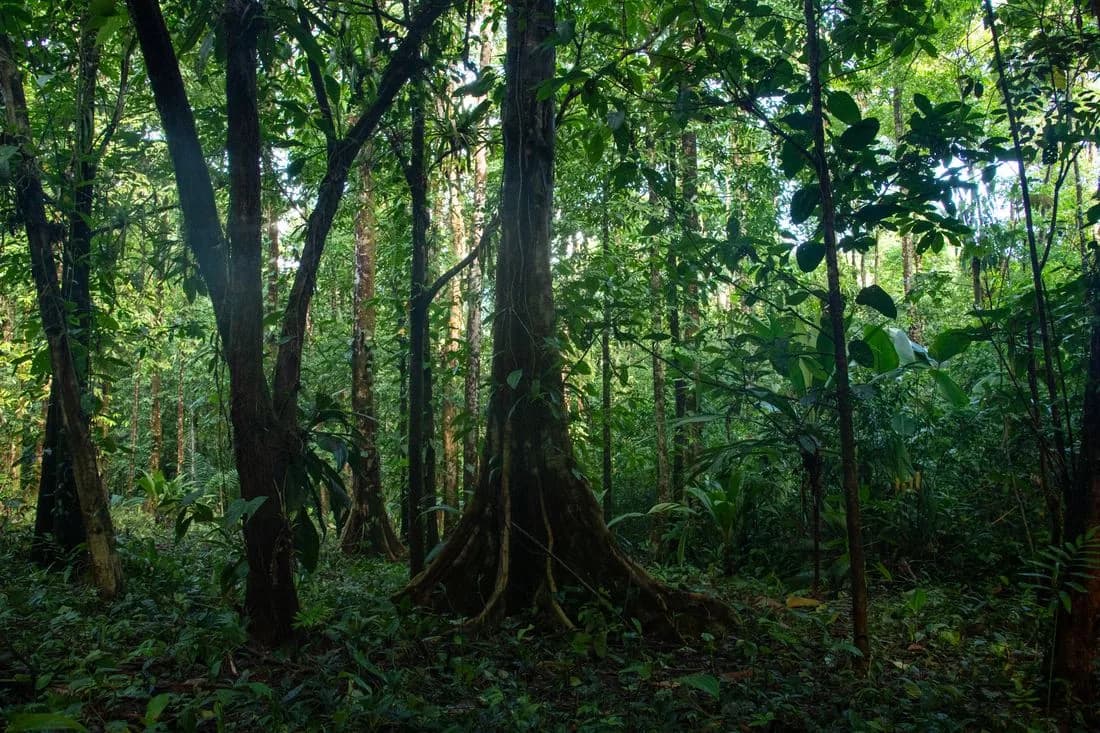
A healthy forest shows up in measurable ways.
Cerro Nara has been under active stewardship since 1991. The signs show up in the survey data: apex predators, endemic orchids, glass frogs in the streams, a forest actively regenerating on slopes that were once degraded pasture.
Forest regenerationApex predatorsWater qualitySeed dispersalPollination networks
01The forest is growing back+
Some of the land was deforested pasture when the family acquired it. It's regenerating now, with large lianas, epiphyte-rich canopy, and intact understory palm systems, mature forest indicators that take decades to develop.
02Seed dispersal networks are functioning+
Bats at 62% of mammal diversity, frugivorous birds moving large seeds across the landscape, tapirs doing it from the ground. The full network of dispersers is present and active.
03Water quality has been tested and confirmed+
Multi-site analysis found pH, nitrates, alkalinity, and chlorides all within natural range and well below drinking water limits. An intact watershed performing as it should.
04Apex predators are documented in the corridor+
Jaguars, pumas, and ocelots. Their presence means prey populations are regulated, the food web is structured, and the habitat is large and connected enough to support animals that need a lot of space.
05Pollination networks are intact+
The orchid richness here, multiple miniature species, several endemic, reflects how complex the pollination community is. Orchids are among the most specialized plants in terms of pollinator relationships.
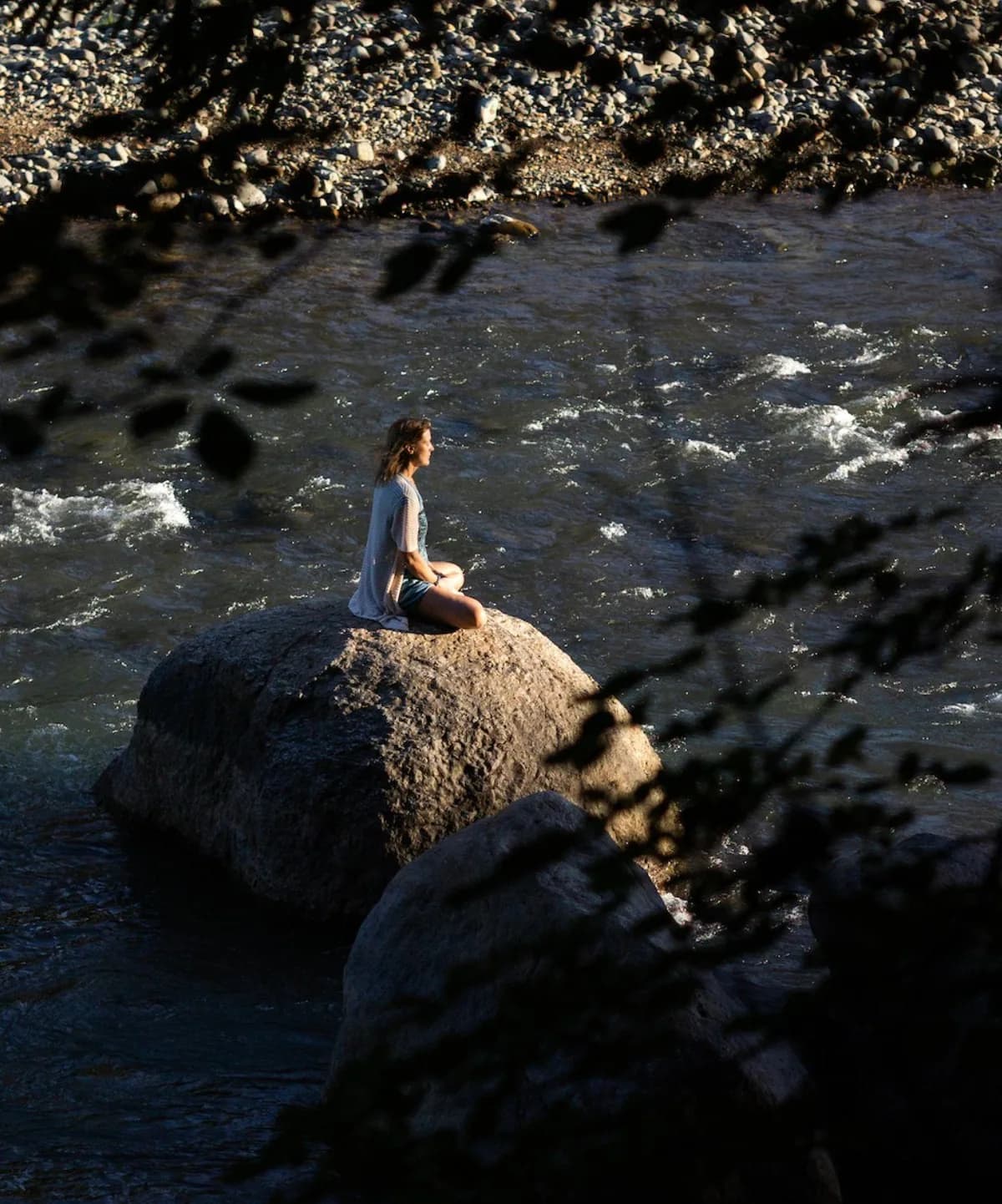
HUMAN HEALTH
People come here and something shifts in them.
Posada Natura is the retreat center built by the Caldarelli De Leon family on the Naranjo River. The programming ranges from contemplative practice, wellness, dedicated programs for first responders + addiction and plant medicine. What holds it together is the forest.
Plant MedicineFirst RespondersForest IntegrationRetreat Hosting
01Plant Medicine Retreats+
Over 15 years of facilitation rooted in Colombian Indigenous tradition, held inside primary rainforest. The forest isn't incidental to the work. It's the context in which the medicine operates.
02Rainforest Integration Programs+
Multi-week programs combining rest, forest bathing, meditation, and yoga in a primary rainforest setting. Designed for people who need something that a clinical environment or a city retreat center can't provide.
03First Responder Programs+
Dedicated programs for firefighters, veterans, and healthcare workers. Nature immersion combined with structured therapeutic support, in a setting that most therapeutic environments can't offer.
04Retreat Hosting for Facilitators+
Farm-to-table meals, ceremonial spaces, riverside accommodations, and full logistics support. External facilitators bring their own programming. Posada Natura handles everything else.
Program descriptions are not clinical evidence or guarantees of outcomes. Retreat participation may require screening and is not a substitute for medical or mental-health care.
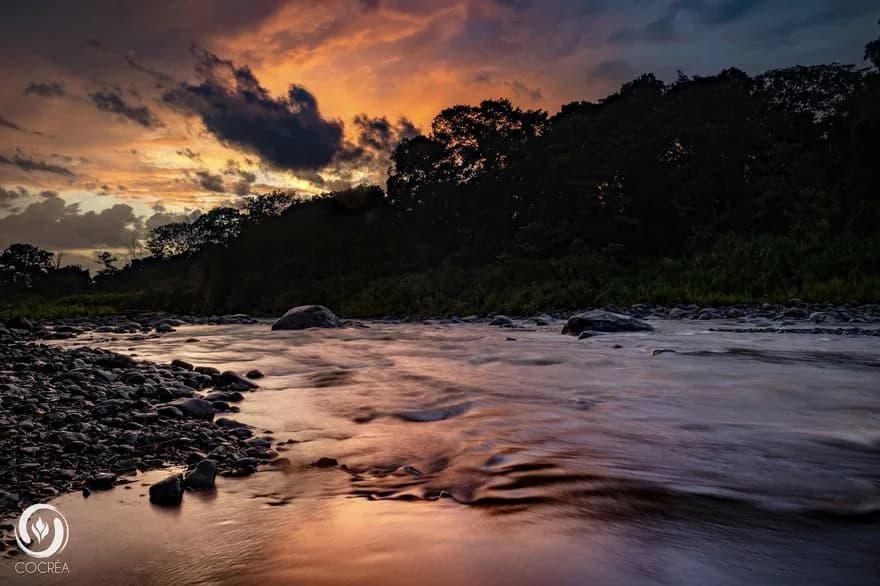
From ridge to river
5downstream communities named in the sourceWatershed
These ecosystems create clean drinking water.
More than half of the Llano Grande watershed lies within the Aguas Claras forest. From these mountains, water flows into the Naranjo and Savegre river systems, two of the cleanest river networks in Central America. The forest acts as a living filtration system. Tree roots slow rainfall, stabilize soil, and feed water deep into the limestone aquifer that supplies drinking water to communities including Londres, Naranjito, and Villanueva.
Scientific water testing across the region found pH, nitrates, chlorides, and alkalinity all within healthy natural ranges and safely below drinking water limits.
If these forests are cleared, the watershed changes immediately. Sediment increases, aquifers weaken, and water quality declines downstream. Healthy rivers begin in intact forests.
Water-quality language is source-reported. The linked source did not include the underlying sampling report or regional cleanliness ranking.
Llano Grande streamEl Maestro streamBrujito streamSalitrillo stream
Downstream community
Londres
The first community downstream of the Aguas Claras slopes, closest to where rainfall first enters the aquifer.
Downstream community
Naranjito
Draws from the same karst aquifer system, midstream in the Llano Grande watershed.
Downstream community
Villanueva
One of the communities named in the water testing surveys, pH, nitrates, and alkalinity all measured safely within healthy natural ranges here.
Downstream community
Buenos Aires
Further downstream, still within reach of the same intact forest recharge zone that starts on this property.
Downstream community
Quebrada Arroyo
The furthest community in the chain, proof of how far downstream the effects of an intact watershed reach.
WHY YOUR GIFT MATTERS
Donors like you are the reason this work is possible.
Eco Era has been stewarding this land for 35 years. The daily work of protecting this forest. Patrolling the trails, maintaining the land, monitoring the ecosystem. All of it depends on people who give because they believe this place deserves to exist. That is not a small thing. It is the reason the forest is still standing.
Every gift to Eco Era supports the ongoing stewardship of the Cerro Nara forest: habitat maintenance, conservation operations, and the long-term care that keeps this landscape intact. None of that continues without people choosing to make it possible.
01 · Habitat stewardship02 · Conservation operations03 · Site maintenance04 · Ecosystem monitoring05 · Long-term land protection
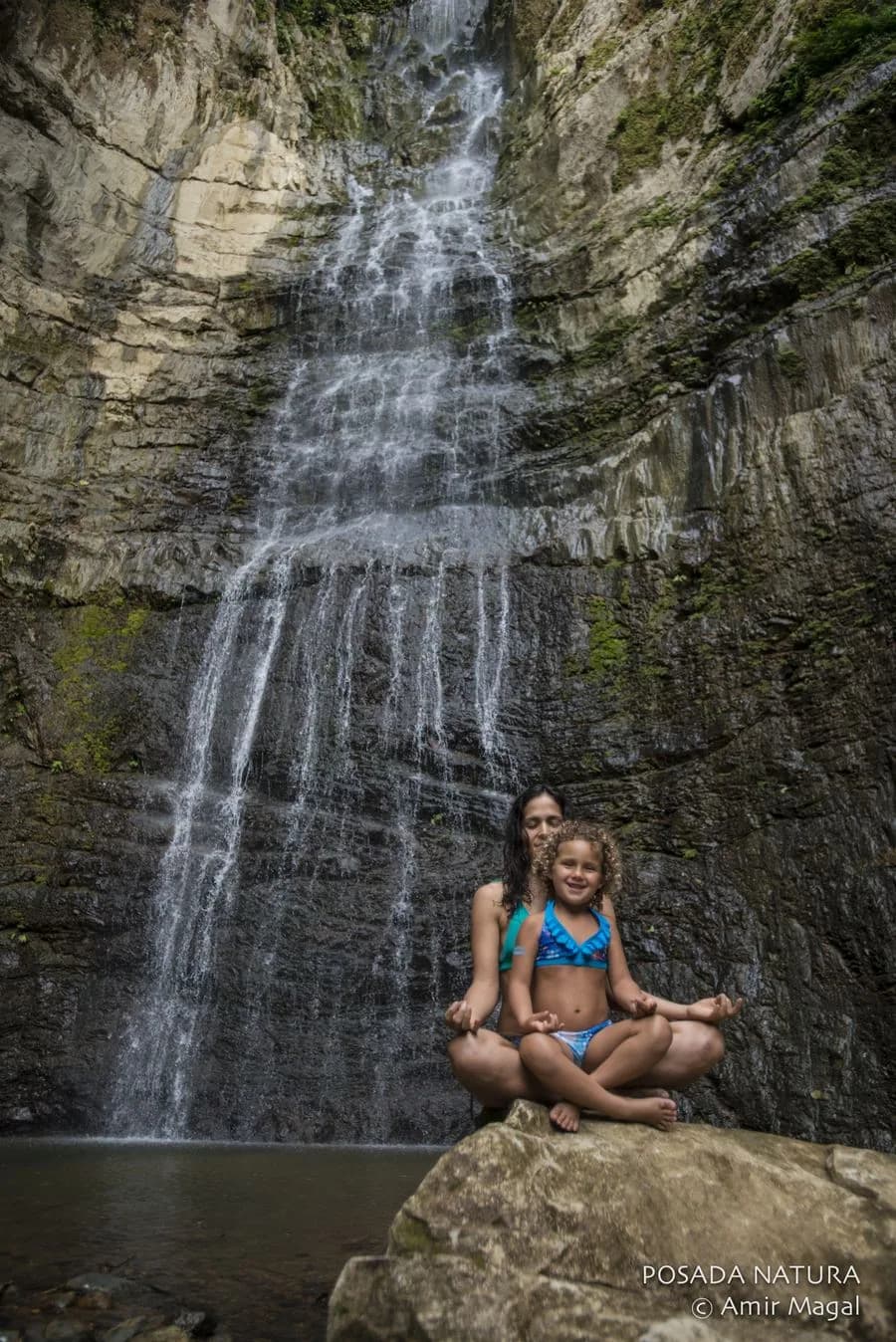
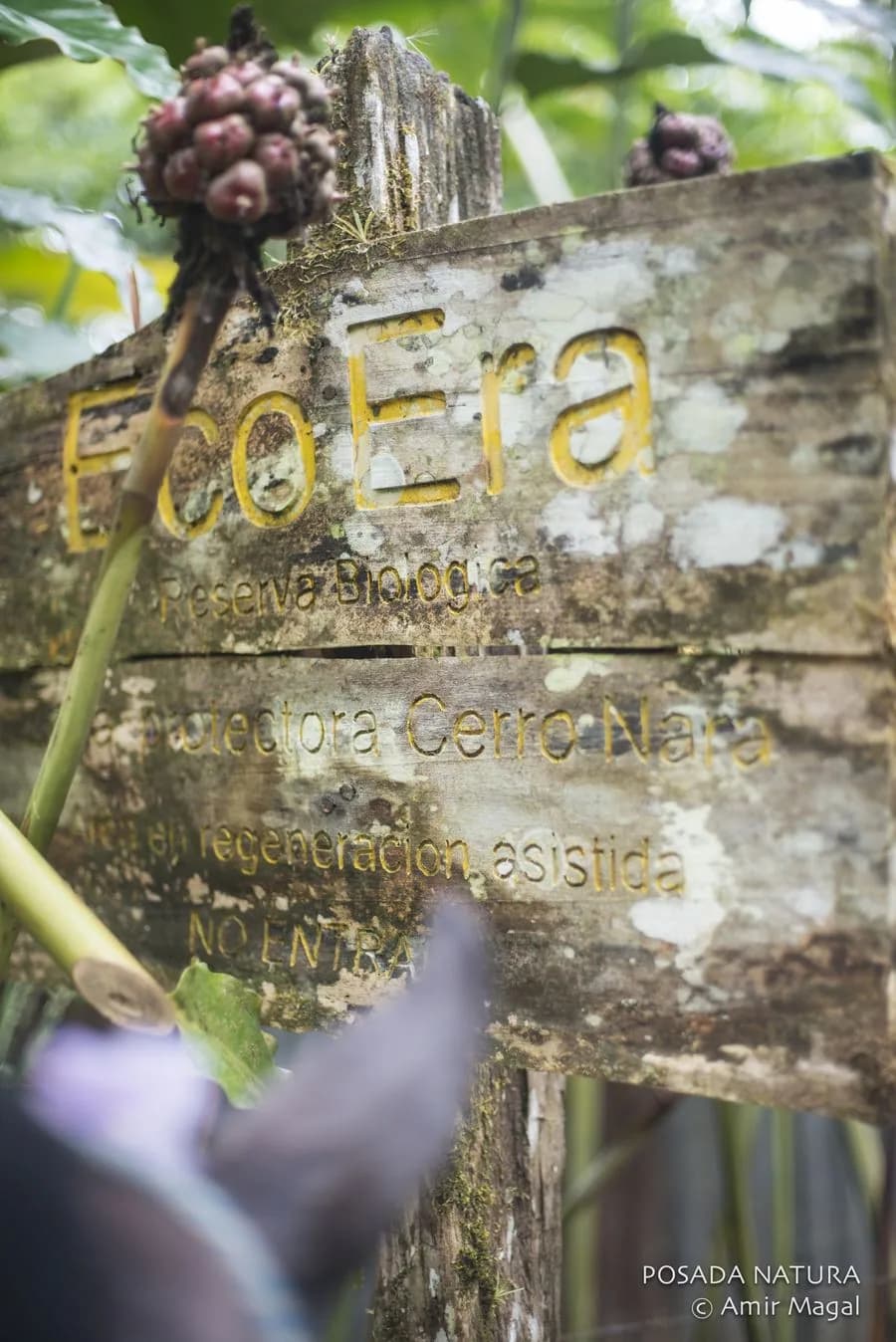
The work on the ground is constant. Caretakers patrol the property every day. Illegal logging pressures are real and ongoing. The forest doesn't protect itself. It requires continuous, active human presence to survive.
Active, ongoing conservation requires sustained support. Caretaker presence, trail maintenance, site infrastructure, native-species reforestation: the daily work of keeping this land intact.
Donor gifts make the difference. The conservation sites here need restoration and continuous upkeep. Gifts from people who understand what's at stake make that possible.
The forest stays intact. Caretakers are on the trails. The watershed keeps flowing clean. The species keep moving through the corridor. And the work continues, season after season, because people chose to make it possible.
MAKE A GIFT
This goes to a specific place. These are the real costs.
Eco Era has been stewarding this operation largely on retreat revenue for years. The gaps are real: a caretaker station without electricity, a research lodge without utilities, trails that need constant upkeep. Every gift below maps to a genuine operational cost.
ONE-TIME GIFT
Make a single contribution
A direct gift toward the daily work of keeping this land protected.
01.01$1,000
One month of habitat stewardship and conservation operations
01.02$2,500
Site maintenance that keeps the Cerro Nara forest protected
01.03$5,000
A full season of stewardship, monitoring, and active land protection
01.04$10,000+
A lasting contribution to long-term care of the landscape
MONTHLY GIFT
MOST SUSTAINABLEGive every month
Steady support that isn’t tied to a fundraising push. The work happens every month, through the rainy season and the dry.
02.01$100/mo
$1,200 a year toward ongoing conservation operations
02.02$250/mo
$3,000 a year, sustains monthly habitat stewardship
02.03$500/mo
$6,000 a year, a full season of land stewardship
02.04$1,000/mo
$12,000 a year, keeps the work running year-round
MAJOR GIFT · SPONSOR A SPECIES
Sponsor a named species and fund its habitat.
Choose a species from the documented list: jaguar, Baird’s tapir, resplendent quetzal, Central American squirrel monkey.
03.01$10K /yr
Starting annual species-sponsorship contribution
Source-published sponsor offering: Your gift comes with an annual field report on that species’ corridor activity, recognition in Eco Era’s funder materials, and one complimentary retreat stay at Posada Natura. Please confirm current availability and terms directly with Eco Era.
Enquire about sponsorship The supplied Stripe checkout currently exposes one-time giving only, so this path goes to the Posada Natura team.35
Years of continuous protection requiring active, daily presence on the land
$30K
Approximate annual cost of conservation operations and stewardship
0
Electricity or running water at the Salitrillos caretaker station right now
1
Family has been doing this since 1991
Eco Era · U.S. 501(c)(3) nonprofit · EIN: 680286784 · Donations are tax-deductible to the extent permitted by law. ProPublica’s IRS-derived record lists the organization as currently tax exempt and shows the present exemption record beginning in May 2021; Eco Era separately dates its stewardship story to 1991.
Source integrity
Copied in full. Checked with care.
This page preserves the supplied Eco Era support content: all 16 featured species, the complete 71-row priority list, four science topics, nine giving tiers, five watershed communities, and both health narratives. Stronger claims are labeled where the source does not expose its underlying study or where a current external source changes the context.
sourceSource record+
Migration snapshot captured from the live Eco Era support page on July 29, 2026. The source returned HTTP 200 and reported a Last-Modified timestamp of July 23, 2026 at 18:08:45 GMT.
Open referencesourceSource record+
The source attributes site-specific biodiversity facts to “UCR biological surveys · Aguas Claras management plan,” but it does not link the underlying survey, management plan, sampling dates, methods, or water-test tables. Preserve the attribution and obtain the primary documents before presenting those claims as independently verified.
verifiedIndependently supported+
UNESCO independently confirms that Savegre was nominated as a biosphere reserve in 2017 and reports that the reserve contains 20% of Costa Rica’s flora, 54% of its mammals, 59% of its birds, and 71 endemic plant species. These percentages describe the full 312,902-hectare Savegre Biosphere Reserve, not the Aguas Claras property.
Open referencescopeContext to confirm+
Do not combine property-level counts with UNESCO reserve-level percentages. The source uses 54 mammal species for the Aguas Claras survey area and 54% of Costa Rica’s mammal species for the much larger Savegre Biosphere Reserve.
scopeContext to confirm+
The 10,000-acre figure changes scope within the source: it is described as Eco Era’s protection mission, as the Cerro Nara primary rainforest, and as acreage in the “surrounding landscape,” while site-specific science is attributed to the Aguas Claras property. Confirm owned, leased, co-stewarded, and legally protected acreage before using one number for all four scopes.
cautionContext to confirm+
The statements that the Naranjo and Savegre are “among the cleanest river networks in Central America” and “#1” are not supported by a linked regional ranking, defined comparator set, or dated water-quality report. The “#1” statistic also overstates the surrounding copy, which only says “two of the cleanest.” Source or soften before publication.
cautionContext to confirm+
The 4M+ tonne carbon figure and 1,036.7 t/ha density are source estimates without a linked inventory or methodology. The U.S. EPA supports an approximate 4.6 metric tonnes of CO₂ per typical passenger vehicle per year, but the source phrase “800,000 cars off the road for a year, permanently” conflates a stored carbon stock with recurring annual avoided emissions.
Open referencecautionContext to confirm+
Species status labels mix IUCN-style categories, CITES appendices, Costa Rican legal protection, local survey descriptors, and marketing labels without assessment dates. “Protected” and “Documented” are not IUCN Red List categories. Reconcile every status and taxonomy against current IUCN, CITES, and Costa Rican sources before publication.
Open referencecontradictionContext to confirm+
The live source contains 16 species cards, not 15. All 16 are preserved here. The source also includes a separate 71-row conservation-priority list, preserved in prioritySpeciesGroups. Boa constrictor appears in the featured cards but not in that separate full-list inventory.
contradictionContext to confirm+
The source says its illustrative wildlife photography is “Unsplash (CC0 license).” Unsplash currently uses the Unsplash License, not CC0. The bundled page embeds the card images as data URIs and exposes no durable photographer or source URLs, so image provenance cannot be reconstructed from the live artifact alone.
Open referencelegalLegal status+
Eco Era’s current 501(c)(3) status and EIN 68-0286784 are corroborated by ProPublica’s IRS-derived Nonprofit Explorer record. Eco Era says its stewardship began in 1991, while the IRS-derived listing shows the present tax-exempt record beginning in May 2021; those dates describe different milestones and should not be conflated.
Open referencecontradictionContext to confirm+
The donation URL is active and opens an Eco Era Stripe Checkout with a changeable one-time amount defaulting to $1,000. The source uses that same URL for GIVE ONCE, SET UP MONTHLY GIVING, and ENQUIRE, but the checkout page exposes no monthly or recurring option. A separate recurring-payment link and a real sponsorship enquiry route are required before those CTAs are accurate.
Open referencecautionContext to confirm+
Claims about therapeutic support, addiction programming, first-responder outcomes, plant medicine, and “something shifts” are preserved source copy, not clinical evidence. Present them as program descriptions, avoid guaranteed outcomes, and align them with the site’s medical and screening disclosures.
cautionContext to confirm+
The $30K annual operating cost, caretaker-station utility status, family stewardship history, illegal-logging pressure, reforestation work, and sponsor benefits are source-reported operational claims. Confirm current budgets, facilities, fulfillment capacity, and donor terms before publication.
Cerro Nara · Paso de la Danta Biological Corridor · UNESCO Savegre Biosphere Reserve
The forest stays standing when people choose to stand with it.
Protecting the Cerro Nara rainforest and its watersheds since 1991. The land is extraordinary. The story holds up.
Posada Natura is the retreat expression of Eco Era's conservation mission