Important context. Ayahuasca can bring up intense physical and emotional experiences, and it is not right for everyone. This guide is educational, not medical advice. Every Posada Natura participant completes an intake and review before ceremony.
Introduction
What is ayahuasca? You may have heard the word from a friend, a podcast or a news story, and found a lot of strong opinions and not many plain answers. This guide tries to give you the plain answers: what it is, where it comes from, what a ceremony is like, and who should not take part.
We hold plant medicine retreats in Costa Rica, so we are not neutral. But we would rather you understand it clearly than feel sold to.
The vine, the leaf and the tea
Ayahuasca is a tea traditionally made in the Amazon region of South America. It is usually brewed from two plants:
- The ayahuasca vine (Banisteriopsis caapi), a woody climbing vine that gives the tea its name.
- The leaves of a shrub, most often Psychotria viridis or Diplopterys cabrerana.
The plants are cooked slowly for many hours, often with prayer and song, until a thick brown tea remains. On its own, each plant does not create a psychotropic effect. Together, they produce the effects people describe.
The word ayahuasca comes from the Quechua language and is often translated as "vine of the soul" or "vine of the spirits." In Colombia and Ecuador the same brew is often called yagé.
Where the tradition comes from
Many Indigenous peoples of the Amazon and the Andean foothills have worked with ayahuasca for generations, as medicine, as a way of knowing, and as part of community life. Each tradition has its own songs, prayers, diets and ways of holding ceremony.
Our plant medicine retreats draw mainly on two healing traditions: the Kamëntšá tradition of the Sibundoy Valley in Colombia, carried by Taita Juan Bautista Agreda Chindoy and those who have apprenticed with him for many years, and Amazonian vegetalismo from Peru.
What happens in an ayahuasca ceremony
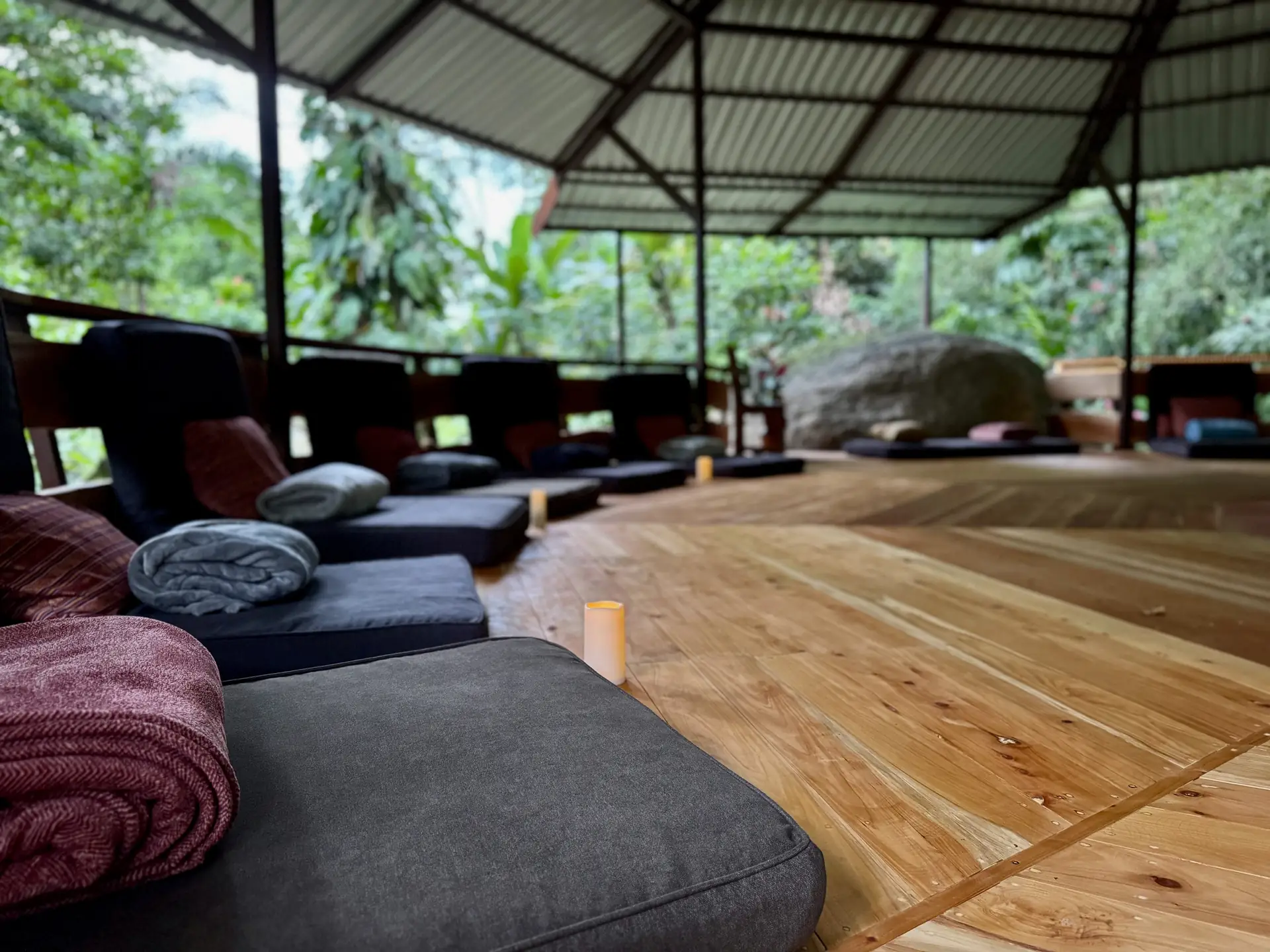
A ceremony usually takes place at night, in a dedicated space, with a small group sitting in a circle. The facilitator opens the space, often with prayer, and serves each person a small cup of the tea. Then the lights go down and the ceremony is held with songs, music and quiet.
The effects usually begin within an hour and last several hours. People describe a wide range of experiences: vivid images, strong emotions, memories, physical sensations, a sense of clarity, or very little at all. Nausea and vomiting are common and are understood in many traditions as a kind of cleansing. Helpers stay with the group through the night.
Our guide to your first ayahuasca ceremony walks through a full night in more detail.
The real risks
Ayahuasca is not right for everyone, and it is important to be honest about that.
- Medications. Ayahuasca can interact dangerously with some medications, especially SSRIs and other antidepressants. This is one reason for the ayahuasca diet.
- Heart and blood pressure. It can raise heart rate and blood pressure.
- Mental health. People with a personal or family history of psychosis, bipolar disorder or certain other conditions may be at real risk.
- Hard experiences. Even for healthy people, ceremonies can be frightening and emotionally intense.
This is why careful screening and experienced facilitators matter. At Posada Natura every participant completes a detailed intake, has a call with their facilitator, and has their information reviewed with our medical advisory board of physicians before being confirmed. Some people are told no, and their deposit is refunded.
Why people come to ceremony
People come for many reasons: insight into one’s life, grief, a sense of being stuck, a wish to understand themselves better, curiosity, or a spiritual search. We do not promise any outcome, and nobody honestly can. What we can offer is a careful setting, experienced facilitators, time in the rainforest and support to make sense of whatever arises.
A pause
If you have read this far, you may have a lot of thoughts moving. That is fine. Before you read anything else, try one slow breath in and a longer breath out. Notice what is here: interest, hope, doubt, fear. All of it is welcome, and none of it needs to be decided today.
Frequently asked questions
What is ayahuasca made of?
Ayahuasca is usually brewed from the ayahuasca vine (Banisteriopsis caapi) and the leaves of a shrub, most often Psychotria viridis, cooked together for many hours into a tea.
What does ayahuasca mean?
The word comes from Quechua and is often translated as "vine of the soul" or "vine of the spirits."
How long does ayahuasca last?
The effects usually begin within an hour and last several hours. Ceremonies often run through much of the night.
Is ayahuasca the same as yagé?
Yes, yagé is the name used for the brew in much of Colombia and Ecuador, including by the Kamëntšá people. Recipes and ceremonial customs differ between traditions.
Who should not take ayahuasca?
People taking certain medications, especially antidepressants, and people with some heart, blood pressure or mental health conditions may be at serious risk. Only a careful screening, together with your own doctor, can tell you whether it is safe for you.
Ready to take the next step?
If you are curious and want to talk it through with real people, we are happy to answer your questions on a free call, with no pressure at all.
See upcoming plant medicine retreat dates or schedule a free discovery call.